
Low Maintenance Front Gardens: Gravel, Paving and Planting
How to balance parking, gravel, paving, planters and planting in a front garden that looks good with little upkeep.
A front garden has more jobs to do than a back garden. It has to look good from the street, hold bins and perhaps a car, give you a safe route to the door, and still be easy to keep. Low maintenance front gardens succeed when each of those needs is planned together rather than added one at a time.
This guide covers the practical choices: the balance between parking and planting, the 5 square metre rule, gravel and paving, planters and borders, privacy, bins, planting and lighting preparation.
Balancing parking, access and greenery
Start by working out what you need from the space: parking for how many vehicles, a clear path to the door, room for bins, and how much green you want to keep. A front garden that is entirely hard surface can feel bare and sends water to the drains, while one with too little hard standing leads to mud and trodden verges.
Measure the space, mark out where the vehicle sits and turns, and plan the planting around those lines. Keeping borders along the edges and by the house wall usually works well and softens the hard areas.
Think about the day-to-day routes too. Where do you carry shopping from the car, where do visitors walk, and where does the post arrive? Paths that follow natural lines are used, while paths that take a detour get cut across and wear the border or the lawn.
The 5 square metre rule for front gardens
In England, paving more than 5 square metres of a front garden normally needs planning permission unless the surface is permeable or rainwater drains to a lawn or border within the property. This applies to hard surfaces such as concrete, block paving and non-porous materials.
Permeable options include gravel, permeable block paving and some resin-bound surfaces, and these allow water to drain through. A dropped kerb, if you need vehicle access across the pavement, is a separate consent from the highway authority. Rules vary with listed buildings, conservation areas and some estates, so always check with your local council before work starts.
Decorative gravel and stabilised gravel grids
Decorative gravel gardens are popular because they are quick to lay and look neat. The practical points are the type, the base and the edge. Angular gravel locks together and stays put better than rounded pebbles, which move under foot and tyres. Choose a size and colour that suits the house, and avoid very fine gravel that sticks to shoes and ends up indoors.
Lay gravel over a weed-control membrane on a prepared, compacted base, and hold it in with firm edging so it cannot spread onto lawns or paths. Expect to rake it occasionally, remove leaves and pull the odd weed that seeds into the surface.
Loose gravel on a driveway shifts under wheels and leaves ruts. Stabilised gravel grids, which are plastic or similar cellular panels filled with gravel, hold the stones in place and give a firmer surface, and they are generally considered permeable. They need a properly built sub-base and correct installation, so the quality of the groundwork matters. Check suitability for your vehicle weight and the drainage plan before choosing one.
- Use angular gravel for areas people walk on.
- Lay a membrane and a firm, compacted base.
- Install strong edging such as metal, concrete or paving to hold the shape.
- Keep it clear of leaves, which rot and give weeds a seedbed.
Paving, paths and walkways
Paving gives the front path and doorstep a clean, durable surface. Garden paths and walkways should be wide enough to walk comfortably, laid with a slight fall for drainage, and have a slip-resistant finish. Permeable block paving, porcelain and natural stone all suit a front garden, with different looks and maintenance needs.
Mix materials sparingly. A paved path through gravel, edged cleanly, looks deliberate and keeps shoes clean. Too many surfaces make a small space look busy. Think about how the path meets the pavement and the door as well, because steps, thresholds and drainage at those points affect both safety and how the water behaves in winter.
A front garden checklist
Before settling on a layout, run through the points that most often catch people out. None of these is difficult on its own, but fixing them after the surface is laid is far harder than getting them right at the start.
- Confirm the permeable surface rule and any dropped kerb needs with your local council.
- Set a gentle fall away from the house and the pavement.
- Allow enough turning and door-opening room around the car.
- Choose edging and base for gravel before choosing the stone.
- Place bins, meters and drain covers before planning planting.
- Lay conduit for lighting while the ground is open.
Raised planters, borders, screening and bins
Raised planters and borders add height and structure without needing a large bed. Brick, sleepers or rendered blockwork all work. They need drainage holes or a free-draining base, and tough planting that tolerates dry spells.
For privacy, a low wall, slatted screen or evergreen planting can soften the view in from the street. Keep sight lines clear where you drive out. Plan bins as part of the design: a hard standing close to the path or a screened store keeps them out of sight and easy to wheel out. If the front garden faces a busy road, a solid screen also helps with noise and dust, though it should not block your view when reversing out.
Low-effort planting and lighting preparation
Evergreen structure plants give year-round shape, with a few perennials for seasonal colour. Choose compact, reliable varieties suited to your light and drainage, and cover the soil with mulch or ground cover to suppress weeds. Use fewer plants in bigger groups rather than a scattering of different ones. Kerb appeal comes from repetition and tidy edges more than variety, so a clean line along the path and a few matching planters can lift a plain frontage.
Pathway lighting preparation is much easier before surfaces go down. Laying conduit under paths and borders now means cables can be added later without lifting new work. Plan where light would help, such as the door, steps and path edges, and have any electrical work carried out by a qualified electrician. A free site visit from us across Worcester and Worcestershire is a good point to think it through.
Common questions
Do I need planning permission to gravel or pave my front garden?
Paving more than 5 square metres of a front garden normally needs planning permission unless the surface is permeable or the water drains to a lawn or border within the property. Check with your local council before starting.
Will weeds grow through gravel with a membrane?
Seeds can still land on top of the gravel and germinate in debris, so some weeding is normal. A good membrane, tidy edging and regular leaf removal keep it to a minimum.
Can I light the path later if I do not want lights now?
Yes, if conduit is laid before the surfaces. Putting ducting in during groundwork avoids digging up finished paving or gravel when you decide to add lighting.
Keep reading
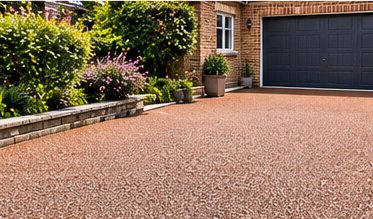
Block Paving or Resin Driveway: Which Is Right for You?
Block paving, resin bound and resin bonded compared on looks, drainage, upkeep and repairability.
Read the guide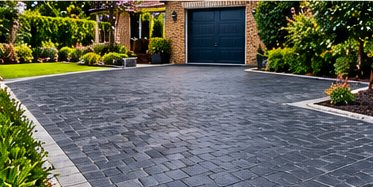
Do You Need Planning Permission for a New Driveway?
The front garden paving rule, permeable surfaces, dropped kerbs and what to ask your council.
Read the guide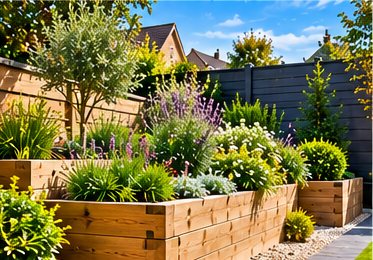
What Makes a Garden Low Maintenance? An Honest Guide
No garden is maintenance-free, but you can design out most of the repetitive jobs. Here is what takes time and how to reduce it.
Read the guidePlanning low maintenance gardens?
Send a few details and we will arrange a free site visit. Photos on WhatsApp help us understand the job before we visit.
Get a free quote
Tell us a little about the job and we will come back to you shortly.