
What Makes a Garden Low Maintenance? An Honest Guide
No garden is maintenance-free, but you can design out most of the repetitive jobs. Here is what takes time and how to reduce it.
Low maintenance does not mean no maintenance. Every garden needs some attention, and the surfaces and plants marketed as effortless all have limits. What you can do is design out the most repetitive jobs, so the garden asks for an hour here and there rather than every weekend.
This guide goes through the tasks that take the most time, the materials and planting that reduce each one, and the honest drawbacks. It also looks at how the answer changes for small gardens, older homeowners and families.
What actually takes the time
Before choosing materials, work out which jobs you dislike or cannot manage. For most gardens it is the same short list, and each has a design fix. Be honest about how much time you actually want to spend, because that, more than any material, decides what is right for your garden.
- Mowing and edging: reduce the lawn, simplify its shape, or replace it with another surface.
- Weeding: use ground cover, mulch, membranes and tight paving joints.
- Hedge trimming: swap tall formal hedges for fencing or slower-growing planting.
- Pruning and deadheading: choose shrubs and perennials that do not need frequent attention.
- Leaf clearing: limit overhanging deciduous trees and avoid fiddly surfaces that trap leaves.
- Cleaning and treating: choose fencing and paving that do not need annual painting or heavy scrubbing.
Lawns: artificial grass and its limits
Replacing a lawn is the biggest single saving on time, because mowing, feeding and edging disappear. Artificial grass suits small, shaded or heavily used lawns, but it is not zero maintenance. It still needs brushing, leaf and debris removal, and attention to pet areas, and it needs a properly built, free-draining base to avoid puddling and wrinkles.
Heat is worth knowing about too. Artificial grass can become warm in strong sun, and it is not a natural habitat for wildlife, so some people keep a small planted border or a tree to balance it.
A natural lawn is still reasonable if it is simple in shape, with straight edges and no awkward corners to trim. Shrinking it to a smaller, easier shape and adding a mowing strip along the border cuts the work without removing it.
Hard surfaces: porcelain, paving and gravel
Porcelain paving resists staining and algae better than many surfaces and is easy to wash down, which makes it popular where people want a tidy seating area. Natural stone and concrete paving also work, though some may need sealing and occasional cleaning. Joints between slabs should be filled with a suitable jointing material to discourage weeds.
Decorative gravel is simple to lay but not effortless. It needs a good membrane beneath, firm edging to keep it in place, and occasional raking, weeding and leaf removal. Without a membrane, weeds come through quickly, and even with one, seeds land in the gravel and germinate.
Fencing, raised beds and borders
Composite fencing avoids painting and treating, though it still needs an occasional wash. Timber fencing can be low effort if it is pressure-treated and stained occasionally. Both depend on solid posts and a proper fixing method, which matters more than the panel material.
Raised beds bring planting up to a height that is easier on the back and keep weeds easier to control. They suit growing herbs, vegetables and flowers, but they need watering, because the soil dries faster. Keep them to a number you will realistically look after. Make sure each bed has a clear purpose, such as herbs by the kitchen door, so it earns its upkeep.
Planting that looks after itself
Ground cover planting fills space so weeds struggle to establish, and a layer of mulch, such as bark or chipped wood, suppresses weeds and holds moisture. Choose shrubs and perennials known to be tough, evergreen where you want year-round structure, and sensible for the size of the space. Avoid anything that spreads aggressively or needs constant trimming.
Group plants with similar needs together and give them room to reach their mature size. Overcrowding leads to more pruning, not less. A few well-chosen plants are better than many fussy ones.
Be careful with watering. New plants need regular water for their first season or so while the roots establish, and low maintenance planting starts to look after itself only once that is done. Planting at the right time of year, usually autumn or spring, makes establishment easier.
Small gardens, older homeowners and families
Small low maintenance gardens benefit from simple layouts: one surface, a few containers, and clean edges. Fewer materials mean fewer joins and edges to maintain. For low maintenance gardens for older homeowners, think about physical effort as well as time: level, non-slip paths, raised planters at a comfortable height, no lawn to push a mower across, and good access to all areas.
Family-friendly low maintenance gardens need hard-wearing surfaces, safe materials and robust planting. Artificial grass or a durable lawn can suit play areas, while soft planting is kept to borders where it is not trampled. Make sure drainage is right in every case, because standing water makes any surface harder to look after.
In any of these gardens, the aim is to be honest about how much time you will give. A garden designed for a keen gardener who wants a short list of jobs is different from one for someone who never wants to pick up a tool, and the design should reflect that.
Drainage, the weekly routine and a complete makeover
It helps to picture what is left once the design is done. In a well-planned low maintenance garden the remaining jobs are usually small and seasonal rather than constant.
Poor drainage undermines low maintenance. Wet lawns, slippery paving and boggy borders are all more work. Falls, sub-bases, channels or soakaways should be sorted before the surface is laid, which is why complete garden makeovers are usually planned as a whole rather than piece by piece.
If you want to talk through what would reduce your own workload, we can offer a free site visit in Worcester and the surrounding Worcestershire towns to look at the garden, the access and what you want from it.
- Brushing or blowing leaves off paving, gravel and artificial grass.
- Pulling the odd weed from joints, gravel and borders.
- Washing paving and fencing once or twice a year.
- Topping up mulch in borders when it thins out.
- A light prune of shrubs after flowering.
- Checking edging, fixings and drainage after heavy weather.
Common questions
Is artificial grass completely maintenance-free?
No. It still needs regular brushing, removing leaves and debris, and cleaning where pets use it. It saves mowing, feeding and edging, but a good base and drainage underneath are essential for it to last and stay flat.
Is gravel a good low maintenance option?
It can be, if it is laid over a proper membrane with firm edging. You will still need to rake it, remove leaves and pull the occasional weed, so it reduces work rather than removing it.
How do I make a garden easier as I get older?
Cut out the heavy jobs first: swap the lawn for an easier surface, use raised planters, and install level, non-slip paths. Good access and simple planting make the biggest difference.
Keep reading
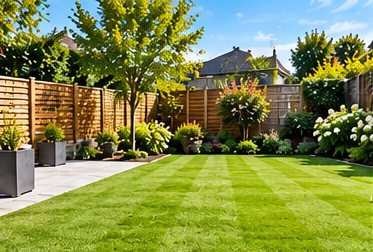
Natural Turf or Artificial Grass: Which Is Right for You?
An honest comparison of natural turf and artificial grass, covering upkeep, drainage, heat, pets, lifespan and when a mix works better.
Read the guide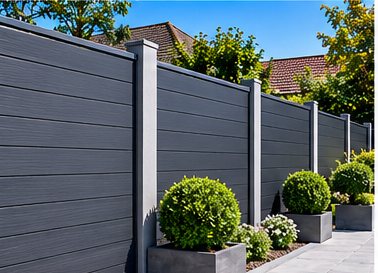
Timber or Composite Fencing: Which Lasts Longer in a Garden?
An honest comparison of timber and composite fencing covering rot, staining, fade, wind load, posts and repairs.
Read the guide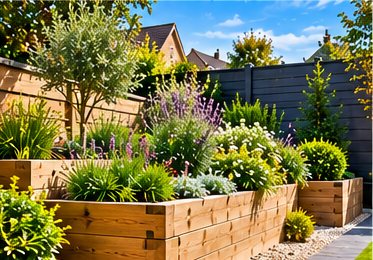
Low Maintenance Front Gardens: Gravel, Paving and Planting
How to balance parking, gravel, paving, planters and planting in a front garden that looks good with little upkeep.
Read the guidePlanning low maintenance gardens?
Send a few details and we will arrange a free site visit. Photos on WhatsApp help us understand the job before we visit.
Get a free quote
Tell us a little about the job and we will come back to you shortly.