
Block Paving or Resin Driveway: Which Is Right for You?
Block paving, resin bound and resin bonded compared on looks, drainage, upkeep and repairability.
Most homeowners choosing a new driveway end up weighing two options: concrete block paving or a resin surface. They look quite different, behave differently once they are down, and fail in different ways. Neither is automatically the right answer, and the choice usually comes down to your property, your tolerance for maintenance and how the driveway will actually be used.
This guide compares block paving driveways with resin bound and resin bonded surfaces, touches on permeable options, cobbles and granite setts, and explains what each one needs underneath. The base matters more than the surface in every case, so we will keep coming back to it.
How block paving looks and the choices you get
Concrete block paving is made from individual pavers, so you have a lot of control over the finished look. Colours run from charcoal, brindle and grey through to red and buff, and you can mix two or three tones to create borders or define a parking bay. Finishes range from smooth and crisp to tumbled block paving, which has softened edges and a slightly aged appearance that suits older houses.
Block paving is also a forgiving surface in one respect: because it is made of small units, it moves slightly with the ground rather than cracking in one line. That flexibility only works when the layers beneath are right, but it is part of why block has stayed so popular on domestic drives.
Size and shape also change the character. Tegula style blocks come in several sizes laid together, giving a more traditional, cottage-like surface. Standard rectangular blocks suit modern frontages and are easier to cut around curves.
- Herringbone pattern: the interlocking zigzag is the strongest choice for vehicles because it resists blocks creeping or spreading under braking and turning.
- Stretcher bond: a simple brick-wall pattern that looks neat but offers less lock, so it is better for lightly used areas and paths.
- Basket weave: a decorative square pattern that suits parking areas that only see occasional car use, and works well as an inset or border.
- Borders and soldier courses: a contrasting edge row that frames the drive and helps hold the field of blocks in place.
How resin bound and resin bonded differ
The two names sound alike but the surfaces are very different. Resin bound means small stones are mixed with resin and trowelled onto a prepared base to form a smooth, porous layer a few centimetres thick. Water passes through it, so it is widely used where drainage rules matter. The finish is seamless, with no joints for weeds to root in.
Resin bonded is a thin coating where resin is spread on the base and loose stone is scattered over it. The surface is rougher and more textured, and it is not porous in the same way. Over time loose stones can work free, particularly on turning areas, so it tends to suit paths and lighter use better than a busy driveway.
Drainage and permeable options
Where the water goes is often the deciding factor. Standard block paving is not permeable by itself, because rain runs across the surface and into the joints but then relies on falls, channels or a soakaway to leave the site. Permeable block paving is different: the blocks have wider joints filled with clean stone, and water drains down through the construction into a stone sub-base designed to hold it, then releases slowly into the ground.
Resin bound is permeable only if the base beneath it is too. A porous resin layer laid over a solid, sealed base simply holds the water on top. For front gardens, where surface water rules apply, ask us or your local council what is acceptable before you decide.
Upkeep: moss, weeds and cleaning
Block paving has joints filled with sand, and joints are where weeds and moss take hold. Expect to sweep, treat moss in shady spots, pressure wash occasionally and top up the jointing sand afterwards. Sealing can slow weed growth and make cleaning easier, but it is not essential and does need reapplying in time.
Resin bound has no joints, so weeds struggle to root in it, but it is not maintenance free. Leaves and silt can settle in the surface and feed algae in damp, shaded areas, so it needs regular brushing and the occasional gentle wash. Oil drips and harsh chemicals are worth avoiding on both.
- Block paving: brush regularly, treat moss, re-sand joints after washing, and watch for any blocks that begin to sink.
- Resin bound: brush off debris, keep gutters and overhanging growth under control, and wash gently rather than blasting at high pressure.
- Resin bonded: check for loose stone and avoid sharp turning of wheels on the same spot.
Repairs and what lies underneath
Think too about how the driveway will be used day to day. A family with two cars, a caravan or regular deliveries puts far more load on the surface than a single small car, and turning wheels on the spot is harder on any surface than driving straight. Tell us how heavy and how frequent the traffic will be, because the depth of the sub-base is chosen to suit it.
This is where block paving has a real advantage. If a section sinks or a utility company digs a trench, the blocks can be lifted, the base corrected and the same blocks relaid, leaving little trace. Resin is harder to repair invisibly. Patches can be cut out and replaced, but the new area may differ slightly in tone, and cracks that start in the base tend to reflect through the surface.
That points to the single biggest requirement: a sound, well compacted base with proper falls. Block paving needs a compacted stone sub-base, a bedding layer and firm edge restraints. Resin needs a stable, properly built base, usually bound stone or porous macadam, and will not hide weak ground. A resin surface laid over a poor base will crack, and a block surface over a poor base will sink.
Cobbles, setts and who each option suits
Granite setts driveways and cobbles have a distinctive, traditional look, but they are rougher to walk on, slower to lay and harder to keep weed free in the joints. They are often better used as a border, a threshold or a drainage detail than as the whole surface.
As a rough guide, block paving suits people who like pattern and colour choice, want a surface that can be repaired in sections and do not mind periodic joint maintenance. Resin bound suits those who want a clean, seamless finish, need a permeable surface, and are happy to keep it brushed. Resin bonded suits light-use areas and paths. If you are not sure, a free site visit lets us look at your levels, access and drainage before you commit to either.
Common questions
Is resin or block paving better for drainage?
Permeable block paving and resin bound laid on a porous base both allow water to pass through. A resin layer over a sealed, non-porous base does not drain, so the whole build-up matters, not just the surface.
Can block paving be repaired if it sinks?
Usually yes. The blocks are lifted, the base is corrected and compacted, and the same blocks are relaid and re-sanded. If the whole base has failed, a full replacement may be the more sensible route.
Do resin driveways get weeds?
Far fewer than block paving because there are no joints, but windblown soil and leaves can still collect and allow the odd weed. Regular brushing keeps the surface clear.
Keep reading
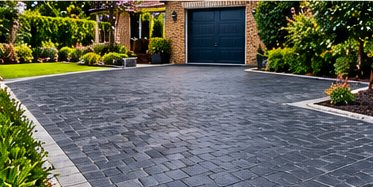
Do You Need Planning Permission for a New Driveway?
The front garden paving rule, permeable surfaces, dropped kerbs and what to ask your council.
Read the guide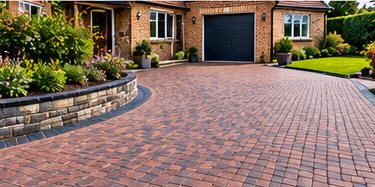
How a New Driveway Is Built: A Clear Step-by-Step Guide
The full build sequence for a new driveway, from site assessment through sub-base to finishing.
Read the guide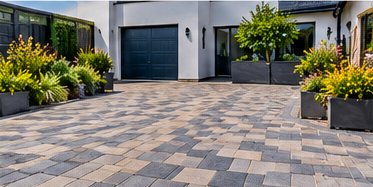
Sunken Block Paving: Causes, Repairs and Aftercare
Why block paving sinks, how repairs are done, and when to replace instead of patching.
Read the guidePlanning driveways?
Send a few details and we will arrange a free site visit. Photos on WhatsApp help us understand the job before we visit.
Get a free quote
Tell us a little about the job and we will come back to you shortly.