
Garden Fencing for Pets, Children and Security
Practical points on gaps, height, latches and visibility when a fence needs to contain pets, protect children or deter intruders.
A fence that works for a dog, a toddler or a home that needs better security is built around slightly different details from one chosen for looks. Small gaps, weak latches and low corners are usually where problems start, and they are easy to overlook when you are choosing a style.
This article covers the points worth thinking about for pets, children and security. No fence is a complete guarantee of containment, and supervision still matters, but sensible details make a boundary more dependable.
Start with the gaps
Small animals and young children can pass through surprisingly narrow openings. Check the base of the fence first, because gaps appear where soil has dropped, where a gravel board is missing or where the fence crosses a dip in the ground. Check also around gateposts, where hinges and latches often leave a hole at the edge.
Panels that sit slightly above the ground on a level fence leave a wedge-shaped gap on slopes, so the lower edge may need infill, a gravel board, a kickboard or stepping the panels to follow the ground. Judge the fence by the smallest animal or child it needs to cope with, not the largest.
- Look along the bottom edge of every panel for daylight.
- Check corners and junctions with walls and sheds.
- Inspect for gaps beside gateposts and where fences meet the house.
- Fix wire mesh or boards behind a picket style if bars are too widely spaced.
Dig-proofing and the bottom edge
Some dogs dig along a boundary, particularly where they can smell or see something on the other side. A concrete or timber gravel board set below ground level gives a solid barrier at the base. Another approach is to lay a strip of paving, gravel or mesh along the inside of the fence, so there is nothing soft to dig into.
None of these stops a determined digger completely, so watch behaviour in the first weeks and adjust. Dogs that dig out of boredom may need more exercise or other outlets as well as a better base. Hedges and borders along the fence can hide holes a dog has started, so walk the boundary regularly and fill hollows before they become gaps. Heavy planters or a strip of stone chippings along the base are simple ways to discourage digging in one spot.
- Set a gravel board slightly below ground level where practical.
- Lay paving, gravel or mesh along the inside of the fence line.
- Fill hollows promptly before they deepen into gaps.
- Give a dog a designated digging or play area away from the boundary.
Height and what dogs can jump or climb
The right height depends on the animal. A small dog is contained by an ordinary fence, while an energetic or athletic one may try to jump or scramble over a lower boundary. Items placed beside the fence, like compost bins, tables, planters and sheds, can give a boost, so keep climbable objects away from the line.
Any increase in height needs to stay within permitted-development limits, which are generally up to 2 m at the back and sides and up to 1 m next to a highway or footpath, with different rules in some areas. Check with your local council before raising a boundary. Picket and bar styles with wide spacing may let small dogs squeeze through or get a head stuck, so check the spacing for the animals you have. Trellis extensions count towards the total height as well.
Gates, latches and children
Gates are the weak point in most gardens. A latch that a child can lift, or a gate that does not close fully by itself, defeats the purpose of the fence. Self-closing hinges, latches set high enough to be out of reach of small children, and a lock or bolt where appropriate all help.
Make sure the gate sits tight to the posts, does not sag and has no gap at the bottom. Gateposts need to be strong enough to carry the load, otherwise the gate drops and the latch stops lining up. Think about which side the latch is on, too. A latch that can be reached over the top from outside is a security weak point, while one reachable only from the garden side keeps both children and visitors under better control. Where a gate opens onto a road or drive, a spring closer and a bolt add reassurance.
Visibility versus privacy
A solid fence hides what is going on in the garden, which many families like, but it can also hide a child or a dog from view when you are indoors. Open styles such as vertical bar or slatted panels allow you to keep an eye on the garden from the house, while giving less privacy to anyone looking in. If the garden is used by young children or pets, positioning seating and play areas where they can be seen from a kitchen or living room window is as important as the fence itself.
A mixed approach often works: solid fencing along the road side or where overlooked, and a more open section near the house or sitting area where supervision matters most.
Security fencing and sensible limits
For security, the aim is to make a boundary awkward and noisy to cross rather than impossible. A taller solid fence at the back and sides, with strong, well-fixed gates, can discourage casual entry. Trellis on top gives a less comfortable handhold, and thorny planting such as roses or berberis can add a further deterrent along the inside of the fence.
Be cautious with anything sharp. Spikes, broken glass, razor wire and similar finishes can injure people, animals and anyone who has a right to be there, and they may cause legal or liability problems. Choose finishes without exposed points, and keep rails and fixings on the inside of the boundary where practical. Good lighting and visible gates are often more effective than hostile finishes.
Ponds, pools and special hazards
If your garden has a pond, pool, steep drop or other hazard, fencing needs to be considered as part of a wider safety plan. We would encourage you to ask for advice from a suitable specialist and your local council, because the right solution depends on the layout and who uses the garden.
During a free site visit we can walk the boundary with you, point out weak spots such as gaps and latches, and explain what can be done.
Common questions
How do I stop my dog digging under the fence?
A gravel board set below ground or a strip of paving or mesh along the inside of the fence gives a hard edge for the dog to meet. Exercise and boredom play a part too, so it is worth watching what is triggering the digging.
Is a solid fence or an open fence better for children?
Neither is ideal in every case. Solid fencing gives privacy and shelter, while open styles let you see the garden from indoors, so many families use a mix depending on the area.
Can a garden fence make my home more secure?
A sturdy, well-fixed boundary with good gates makes casual entry harder, and fittings such as locks, trellis toppers and prickly planting can add to that. No fence stops a determined intruder, so it works as one part of a plan alongside lighting and good habits.
Keep reading
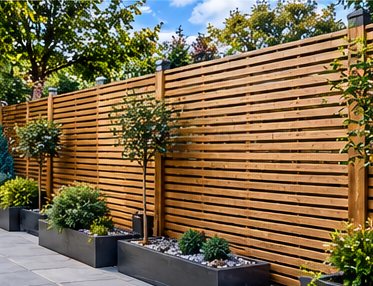
Fence Height and Boundary Rules in England: What to Check First
What to check before fitting or replacing a boundary fence in England: height limits, ownership, neighbours, slopes and access.
Read the guide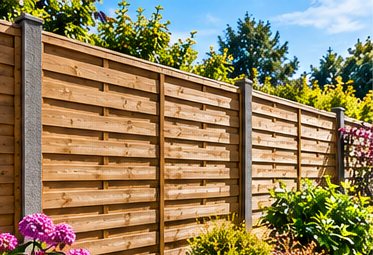
Garden Gates: Types, Fitting, Hardware and Common Repairs
Gate types, openings, posts, hinges, latches and locks, plus why gates sag and how to prepare for automation.
Read the guide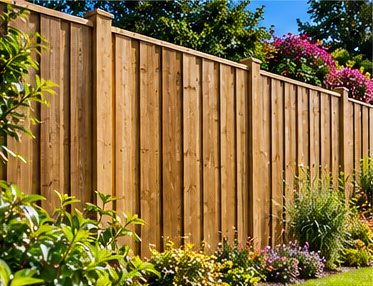
Privacy Fencing Ideas for Gardens and Neighbours
Ways to screen a garden from neighbours and passers-by, and how to balance privacy, wind, light and good relations next door.
Read the guidePlanning fencing?
Send a few details and we will arrange a free site visit. Photos on WhatsApp help us understand the job before we visit.
Get a free quote
Tell us a little about the job and we will come back to you shortly.