
Fence Height and Boundary Rules in England: What to Check First
What to check before fitting or replacing a boundary fence in England: height limits, ownership, neighbours, slopes and access.
Most boundary fence problems start before a single post goes in. A fence goes up at the wrong height, on the wrong line, or without a word to the neighbour, and the result is an argument that could have been avoided. A little checking first saves a great deal of time and goodwill compared with putting it right afterwards.
This guide covers the general rules for garden boundary fencing in England, how to work out whose fence it is, how to talk to neighbours, and the practical points that catch people out: slopes, stepped panels, trellis toppers and access. It is general information, not legal advice, so always check with your local council for your own plot.
Fence height rules in England
As a general rule, a fence, wall or gate can be put up without planning permission up to about 2 metres at the back and sides of a house, and up to about 1 metre where it is next to a highway or footpath. That second limit usually catches the front boundary, and it can also affect a side fence on a corner plot that runs alongside a road.
Different rules apply to listed buildings, conservation areas and some estates, and a covenant in your deeds may restrict height or style regardless of planning rules. Always check with your local council before ordering materials, particularly if your property is older or sits in a protected area.
- Rear and side boundaries: generally up to 2 metres.
- Beside a highway or footpath: generally up to 1 metre.
- Listed buildings and conservation areas: different rules, so check first.
- Estate covenants can restrict height and style even where planning does not.
- Ask your local council if you are unsure about your plot.
Whose fence is it?
Boundary ownership depends on your title deeds, not on custom or which way the fence faces. Deeds and plans may show boundary responsibility, and some include marks that indicate which owner is responsible, but these are usually only indicative and should be read cautiously. The 'good side' of a fence is a common belief, but not a reliable guide.
If the paperwork is unclear, or if you and your neighbour disagree, do not guess. Seek legal advice before replacing or moving anything. A disagreement over where a boundary lies is a legal question, and builders cannot settle it for you.
Talking to your neighbours first
Even where the fence is clearly yours, speak to the neighbours before work starts. A short list helps. Explain the style, the height and the timing, and ask if they have any concerns, such as plants growing up the old fence or a gate they use. Most issues are minor and easy to sort out in a short chat.
If the boundary is shared, agree who is replacing it and whether the cost or the work is being split. Put what you agree in a short message so you both remember the same thing. Replacing a shared boundary politely, and giving notice of the dates, avoids most of the friction. If the old fence is leaning into their garden or has panels missing, mention that too, because it is a good reason to renew it and they are likely to welcome the news.
- Which style and height you plan.
- When work is likely to start and how long it may take.
- Whether we need access from their side.
- What happens to plants or climbers on the old fence.
- A phone number in case something comes up.
Fences on slopes and uneven ground
On a sloping garden, fence installation takes more planning. Ready-made panels are rigid, so they are normally stepped: each panel sits level, and the gap beneath is filled by gravel boards or the ground is graded. Stepping can look neat and suits steady slopes, but each step creates a small triangular gap at the post that may need closing for privacy or for pets.
Closeboard, or feather edge, fencing can follow the slope more smoothly because the boards are fixed on site. The measured height is the point to check on a slope: a stepped panel can be taller than expected at the high end. Posts on a slope still need to be set plumb, not square to the ground, and rails on a closeboard fence are normally fixed to follow the slope. Hilly plots, for example those on the slopes near the Malvern Hills, often need this thought through before ordering.
Trellis toppers, side and front boundaries
A trellis topper is a popular way to add privacy, but it counts towards the overall height. A fence at the general limit plus a topper can go over it, so measure the whole structure from ground level. Side garden fencing next to a driveway or path, and any front garden fencing, is more likely to hit the lower limit near a highway or footpath.
Rear garden fencing is usually the simplest, since the height limit is higher and the fence is rarely seen from the road. Front boundaries often work better as lower, more open styles such as picket or post and rail, or a mix of fence and planting. New build gardens may have covenants on materials or heights, so read the paperwork you received at purchase.
Hedges, fences and getting access
Hedges and fences solve different problems. A hedge softens a boundary and supports wildlife but needs regular trimming and takes time to establish, while a fence gives an instant, defined line. If a hedge is part of the problem, whether it is overgrown or leaning, speak to the neighbour about it before anyone cuts it back.
Fitting a new fence often needs access to both sides of the boundary line. Posts, boards and concrete mean working close to the boundary, sometimes from a neighbour's side. Ask permission, tell them when we will be there, and clear plants or furniture from the working strip. Do the same on your own side, and move bins, pots and anything fragile before the day. Where a neighbour says no to access, tell us before work starts so the method can be adjusted, for example by building from your side only.
When something goes wrong
If a neighbour objects, or if a fence has been put up on land that may not be yours, stay calm and keep records. Take dated photos, keep copies of any messages, and avoid taking down or altering a shared structure until you know where you stand.
Party structures and boundary disputes can become legal matters, so seek legal advice if you cannot agree. If the fence is simply old and you want it replaced, we can look at it on a free site visit, measure the runs and talk through heights, posts and access before you decide.
Common questions
Do I need planning permission for a garden fence?
Generally not, as long as it stays within about 2 metres at the back and sides and about 1 metre beside a highway or footpath. Listed buildings, conservation areas and some estates have different rules. Check with your local council for your own plot.
Can I put a trellis on top of my fence?
Often yes, but the trellis counts towards the total height. Measure from the ground to the top of the topper, not just the panel, and check against the limit that applies to your boundary.
Does my neighbour have to agree to a new fence?
If the fence is entirely on your land and within the rules, agreement is not usually required, but telling them is sensible. For a shared boundary, or if ownership is unclear, check your deeds and seek legal advice rather than assuming.
Keep reading
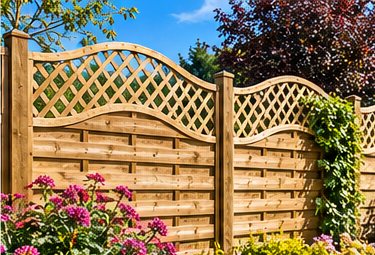
Types of Garden Fencing Explained: Styles, Privacy and Upkeep
A plain guide to the main garden fence styles, covering looks, privacy, strength, upkeep and where each one makes sense.
Read the guide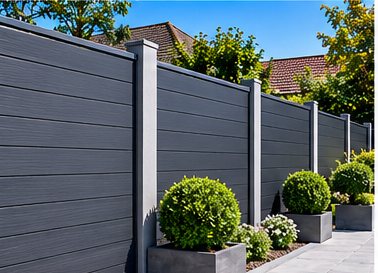
Timber or Composite Fencing: Which Lasts Longer in a Garden?
An honest comparison of timber and composite fencing covering rot, staining, fade, wind load, posts and repairs.
Read the guide
Garden Gates: Types, Fitting, Hardware and Common Repairs
Gate types, openings, posts, hinges, latches and locks, plus why gates sag and how to prepare for automation.
Read the guidePlanning fencing?
Send a few details and we will arrange a free site visit. Photos on WhatsApp help us understand the job before we visit.
Get a free quote
Tell us a little about the job and we will come back to you shortly.