
Block Paving Driveway Patterns and Colours: How to Choose
How to pick a block paving pattern, border and colour mix that suits your house, your drive size and the way you use it.
Two driveways built from identical blocks can look completely different. The pattern you lay them in and the colours you mix change how big the drive feels, how well it suits the house and, in some cases, how long it stays tidy. Most people choose a block colour in a showroom and give the pattern about thirty seconds of thought, which is the wrong way round.
This guide walks through the common patterns, how borders and soldier courses work, how to think about colour, and how to match a drive to your house. It also covers the practical side: some patterns are stronger under cars than others, and some colours hide dirt far better than they look on a sample board.
Herringbone, stretcher bond and basket weave
Herringbone is the usual choice for a driveway, and there is a practical reason as well as a visual one. The blocks lock into each other at an angle, so a car turning its wheels on the spot pushes against a surface that resists being dragged sideways. Laid at forty-five degrees to the drive it looks lively and hides small irregularities; laid at ninety degrees it looks more formal and square.
Stretcher bond, where blocks sit in staggered rows like brickwork, is the plainest pattern. It is quick to lay and looks calm, but it has less built-in grip against movement, so it suits lightly used areas such as paths, parking bays that are not turned on, and wide aprons where traffic runs straight. Basket weave pairs blocks into small squares and gives a traditional, cottage-style look. It is better kept for smaller, low-traffic areas or as a feature panel, because the repeating squares can move more under heavy turning.
Pattern also affects how much cutting is needed. Herringbone laid on the diagonal produces a lot of triangular cuts along the edges, which is why a border or soldier course is often added to give those cuts a tidy, supported finish. Ask your installer how the pattern will meet walls, drains and the house, because the neatness of those junctions is what people notice every day.
- Herringbone: strongest interlock, suits most family driveways and any spot where cars turn.
- Stretcher bond: simple and clean, better for straight runs and lighter use.
- Basket weave: decorative, suits small drives and feature panels.
- Random or multi-size ranges: relaxed, aged look that suits older properties.
Borders, soldier courses and feature panels
A border in a contrasting colour frames the drive and ties it to the house. It also does a job: a row of blocks running around the edge gives the field of paving a firm, straight boundary and makes cutting neat. Where the main pattern meets a wall, drain or kerb, a soldier course (blocks laid end to end in a single row) means you avoid a ragged line of tiny cut pieces.
Keep the border proportionate. On a small front drive, one or two rows is usually enough; a wide border can make the central area feel like a postage stamp. A feature panel, such as a square of basket weave or a contrasting inlay near the door, can break up a long expanse, but too many shapes make a drive look busy and create more cuts, which are the weakest points in any block surface.
Choosing colours that suit the house
Start with what is already fixed: the house brick, the roof tiles, the window frames and the front door. You are not trying to match them exactly, which rarely works, but to sit comfortably beside them. Warm red brick often pairs well with a brindle or charcoal mix, and cooler grey render looks right with grey or charcoal. Buff and gold tones suit stone or cream houses but can show tyre marks and organic staining more readily.
Always look at samples outdoors, wet and dry, and ideally laid out together on the ground. A colour that looks quiet in a brochure can look quite different across a whole drive, and block paving darkens noticeably when it is wet.
Roof tiles matter more than people realise, because the roof is the largest block of colour you see from the road. A dark slate or grey roof tends to sit happily with charcoal and grey paving, while a red clay tile can make cold greys look disconnected. If you are unsure, brindle blends are the most forgiving.
- Charcoal: crisp and modern, hides oil and tyre marks well, but can show pale dust and efflorescence.
- Brindle: a blend of browns, reds and greys that forgives dirt and suits traditional homes.
- Grey: contemporary and neutral, works with render and modern windows.
- Red: warm and traditional, works with plenty of contrast from the house.
- Buff: soft and light, shows staining more easily than darker colours.
Mixing colours without making a mess
Many ranges come as a pre-blended mix, and blended blocks are laid from several packs at once so the shades spread evenly. This matters more than people expect: if one pack has a slightly different batch of colour, laying it all in one patch leaves a visible patch. A good installer pulls from multiple packs as they go.
If you want a mix of your own, two tones usually look better than three or four. A main colour with a darker border, or a main colour with a few lines of a second shade, looks planned. A scatter of five colours looks accidental. Ask to see the combination laid out before you commit.
Tumbled or smooth, and how colours age
Smooth blocks have crisp edges and a modern look. Tumbled blocks have worn corners and a slightly weathered face, so they look established from day one and tend to hide small chips and edge wear better. They also give a little more texture underfoot, which can be useful on a gentle slope in wet weather.
All coloured blocks change over time. Sunlight softens pigments gradually, and some surface lightening, called efflorescence, can appear in the first months as natural salts rise from the concrete. It usually fades by itself. Darker colours tend to show fading and dust more clearly than mid-tones, which is worth knowing if you are tempted by a very dark charcoal.
Small drives, large drives and keeping it practical
On a small drive, simplicity wins. One pattern, one main colour and a modest border make the space feel larger and cut down on awkward cuts. Running the herringbone diagonally can make a narrow plot look wider. Large drives can carry more: a border, a change of pattern near the door or a contrasting line to break up the mass.
Whatever you choose, remember the pattern is only as good as the base underneath it. Even a handsome layout will sink and shift on a poorly compacted sub-base. We handle the groundwork, drainage, laying and finishing ourselves, and we are happy to talk through patterns and colours at a free site visit before you decide.
Common questions
Which block paving pattern is strongest for a driveway?
Herringbone is generally the strongest, because the angled interlock resists blocks being pushed sideways by turning wheels. It is the usual recommendation wherever cars manoeuvre. Stretcher bond and basket weave are better for lighter use.
Which colour hides dirt and oil well?
Mixed browns and greys, such as brindle, and mid to dark charcoals tend to hide everyday marks most readily. Pale buff and light grey show staining more readily. Whichever you pick, regular sweeping and prompt cleaning of spills matter more than the colour.
Will my block paving fade?
Coloured blocks soften gradually in sunlight, and the change is usually slow and even. Darker shades show fading more clearly than mid-tones. Choosing a blend rather than a single flat colour makes any change harder to notice.
Keep reading
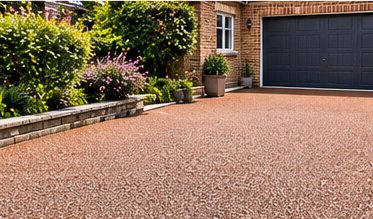
Block Paving or Resin Driveway: Which Is Right for You?
Block paving, resin bound and resin bonded compared on looks, drainage, upkeep and repairability.
Read the guide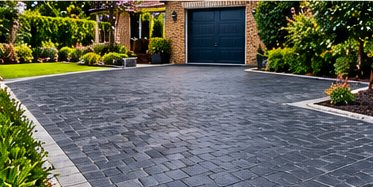
Driveway Edging, Kerbing and Steps: Getting the Edges Right
Why driveway edges fail, which kerb types to consider, and how to handle steps, ramps, thresholds and drainage at the entrance.
Read the guide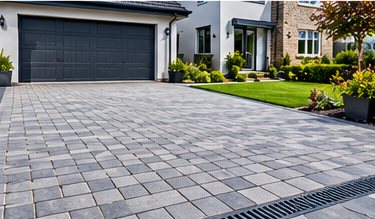
Driveway Weeds, Moss and Oil Stains: Cleaning and Care
Routine care and safe cleaning for block paving and resin drives, plus how to treat weeds, moss, algae and oil without damaging the surface.
Read the guidePlanning driveways?
Send a few details and we will arrange a free site visit. Photos on WhatsApp help us understand the job before we visit.
Get a free quote
Tell us a little about the job and we will come back to you shortly.