
Dog and Child Friendly Lawns and Artificial Grass Guide
What to look for in pet and child friendly lawns, from drainage and backing to odour, shockpad, edging and hard-wearing turf.
Dogs and children are the hardest test a lawn faces. They run the same routes, dig, skid, spill things and use the garden in all weather. Whether you choose natural turf or synthetic grass, the surface has to cope with heavy daily use and still be pleasant to sit on.
This guide looks at what to check if you are considering dog-friendly artificial grass or artificial grass for children's gardens, what to expect with urine and odour, how natural turf copes, and how to plan a family garden around real use. No surface is completely safe or child-proof, so the aim is to reduce the common problems sensibly.
What to look for in pet-safe artificial lawns
For pet-safe artificial lawns, the foundations matter more than the label on the roll. Look for a product with a permeable, well-perforated backing, a dense pile that feels soft and resilient, and fibres that spring back after use. Ask to see and feel samples, preferably outdoors, and check how the backing is constructed.
Think about the whole build, too. A permeable sub-base laid to a proper fall, with a dense blinding layer, is what lets liquid drain away rather than sit under the surface. If the ground beneath is heavy or already holds water, say so at the site visit so the base can be designed with that in mind.
Soft artificial grass is more comfortable for bare feet and paws, but softer fibres can flatten more quickly under heavy use, so there is a balance to find. Ask the installer about the product's intended use rather than relying on marketing terms like pet-friendly.
- Permeable, well-drained backing so liquid does not pool.
- A dense pile that feels soft but recovers when walked on.
- A secure base and edging so the surface does not shift or lift.
- A sample you have tested in your own garden.
Pet urine, drainage and odour
Pet urine drainage solutions start with the base. Urine drains through the backing into the permeable sub-base, but some residue stays on the fibres and base, and in warm weather this can cause a smell. A free-draining base with a proper fall, plus regular rinsing, keeps this under control. It will not eliminate odour entirely in every case, particularly where the same spot is used again and again.
Solid waste should be picked up promptly and the area rinsed. For artificial grass odour treatment, use a hose and a cleaner suitable for artificial surfaces, and avoid harsh chemicals that can damage fibres or the base. Some owners add an odour-neutralising product, but regular cleaning does most of the work. Artificial grass deep cleaning, with a stiff brush and a thorough rinse, is worth doing now and then, especially in summer.
Infill choices and digging
Some artificial lawns use infill, which adds weight and helps the fibres stand up. For pet areas, certain infills are marketed as odour-reducing, but the evidence for how well they work in practice is mixed, so be cautious about big claims. Ask what the infill is made of, how it is cleaned, and whether the product really needs it.
Dogs that dig can be a problem for any surface. Strong perimeter edging, nails or pins fixed at close intervals, and a well-compacted base make it harder for a dog to get under the edges and lift the grass. A determined digger may still need training or a designated digging area elsewhere in the garden.
Children, shockpad and play areas
For artificial grass for children's gardens, a shockpad underlay gives extra cushioning beneath play equipment, swings and slides. Artificial grass with shockpad underlay can reduce the impact of falls to some degree, but it does not make a fall harmless, and it is not a replacement for supervision or proper equipment. Ask about the depth and type that suits the equipment height.
Play areas are easier to manage when planned before the surface goes down. Decide where the swing, slide or trampoline will sit, leave clear space around each one, and keep them on firm, level ground. A trampoline, for example, needs its legs on stable footing, and a shockpad or lawn under it will not correct a sloping base.
Keep the surface clean and free of hazards such as stones, sharp debris and pet waste. In sunny spots, check how hot the surface becomes before children play barefoot, and rinse it with cool water if needed. Make sure fixings and seams are secure and edges are sound.
- Use a shockpad under climbing frames, swings and trampolines where appropriate.
- Check surface temperature in direct sun before barefoot play.
- Inspect seams and edges regularly for lifting.
- Keep play equipment on level, firm ground.
How natural turf copes with dogs and children
Natural lawns can handle family life if you choose the right grass and accept some wear. Hard-wearing family garden turf, based on tough, fast-recovering grasses, copes with play far better than fine ornamental turf. Dogs' urine can leave yellow or brown spots, particularly in dry weather, and heavily used routes will thin out over time.
The wear is not random. Dogs patrol fences, wait at doors and race to gates, and children wear a track between the back door and the swing. Watch where the traffic goes for a week or two before deciding on materials, because a path or hard-wearing strip along those lines does more good than any amount of reseeding.
Wear patches can be reduced by rotating play areas, watering urine spots, and repairing bare ground with overseeding or patches of fresh turf in spring or autumn. Muddy areas in winter are the main complaint, so a path, patio or a hardwearing section around gates and goalposts can protect the rest of the lawn.
Planning a family garden that works for everyone
A family garden usually suits a combination. A hard-wearing lawn or artificial surface for play, a paved area for seating and muddy-weather access, borders for planting, and a defined spot for the dog to toilet makes the whole garden easier to manage. Think about where people actually walk and play, then build the surfaces around those routes.
Fencing and gates matter too, since a secure boundary is the first thing a dog owner or parent needs. Think about sightlines from the kitchen window, storage for toys, and where a trampoline or play frame would sit. We are happy to look at the garden on a free site visit and suggest a layout that suits how it is used.
Common questions
Is artificial grass safe for dogs?
Many dogs use it without any problem, but no surface is completely safe. Choose a well-drained product with a secure base, keep it clean, and check how hot it gets in direct sun.
Will artificial grass smell if my dog uses it?
It can, particularly in warm weather or where the same spot is used repeatedly. Good drainage, prompt clearing of waste and regular rinsing and cleaning keep odour manageable, though they may not remove it entirely.
Do I need a shockpad for a children's play area?
A shockpad adds cushioning under play equipment and is worth considering, but it does not make falls harmless. The right type and depth depends on the equipment, so check before you buy.
Keep reading
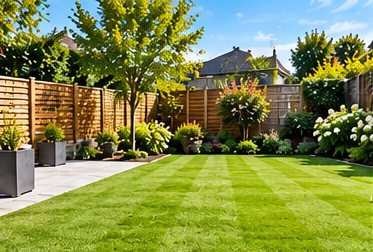
Natural Turf or Artificial Grass: Which Is Right for You?
An honest comparison of natural turf and artificial grass, covering upkeep, drainage, heat, pets, lifespan and when a mix works better.
Read the guide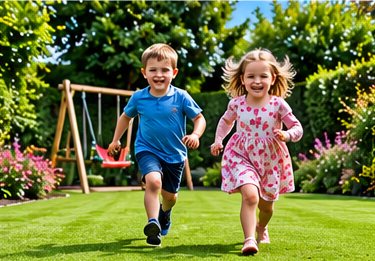
When to Lay a New Lawn and How to Look After It Properly
Timing, ground preparation, laying, watering and aftercare for a new turf or seeded lawn, plus how to pick the right type of grass.
Read the guide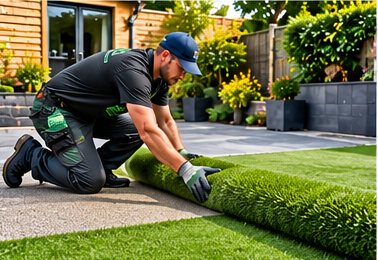
How Artificial Grass Is Installed: A Step-by-Step Guide
The full artificial grass installation process, from removing the old lawn to sub-base, drainage, edging, seams and finishing.
Read the guidePlanning turfing & lawns?
Send a few details and we will arrange a free site visit. Photos on WhatsApp help us understand the job before we visit.
Get a free quote
Tell us a little about the job and we will come back to you shortly.