
When to Lay a New Lawn and How to Look After It Properly
Timing, ground preparation, laying, watering and aftercare for a new turf or seeded lawn, plus how to pick the right type of grass.
A new lawn is only as good as the ground underneath it. Most failures, such as yellow patches, dips, shrinking joints and thin grass, trace back to poor preparation or poor aftercare rather than the turf itself. Getting the timing and the groundwork right matters more than almost anything else you can do.
This guide covers when to lay turf or sow seed, how ground preparation and topsoil supply and installation should work, how fresh lawn turf laying is done properly, and what to do in the first weeks and months afterwards. It also looks at the main types of turf so you can match the grass to how you use the garden.
The right time of year to lay a lawn
Autumn and spring are generally the easiest times. The soil is warm enough for roots to establish in autumn, or beginning to warm in spring, and rainfall helps with watering. Turf can be laid at other times of year, but summer needs far more watering and winter carries more risk.
Avoid laying on frozen ground, on waterlogged soil, or during a drought. Turf laid in a hot dry spell can dry out at the edges before it roots, and turf laid onto sodden ground tends to sit in mud and fail to knit. If the weather is wrong, it is usually better to delay by a week or two than to push ahead.
Ground preparation and topsoil
Lawn ground preparation starts with clearing the site: old turf, weeds, stones, builders' rubble and roots. Compacted ground should be broken up, because turf roots will not push far into hard soil. For lawn turfing on new builds, the topsoil is often thin and mixed with rubble, so it may need to be replaced or topped up.
Good topsoil supply and installation gives the roots a loose, crumbly layer to grow into. Poor soil can be improved with soil conditioning, such as well-rotted organic matter, and a pre-turfing fertiliser. Once the soil is spread, it is raked, firmed by treading and raked again until it is level, with a gentle fall away from the house so rainwater does not collect.
- Remove stones, rubble, roots and perennial weeds before anything else.
- Break up compacted subsoil so water and roots can move down.
- Use good-quality topsoil of enough depth, spread evenly and firmed.
- Rake to a fine, level finish, with a slight fall away from buildings.
Laying turf properly
Turf should be laid as soon as possible after delivery, as rolls left stacked can heat up and yellow. Start along a straight edge and lay the rolls in brick-bond pattern, with joints staggered so that the seams do not line up. Push each piece tightly against its neighbour without stretching it, and avoid leaving gaps that will dry out.
Work from planks or boards so you do not leave footprints in the prepared soil. Trim the edges and awkward corners with a sharp knife, avoid thin slivers at the edges that dry out quickly, and finish by lightly rolling or tamping to make good contact with the soil. A final thorough watering settles everything in.
Watering and aftercare in the first weeks
New turf needs regular watering until the roots have knitted into the soil, which usually takes a few weeks. Water enough to soak the turf and the soil beneath it, rather than a light sprinkle, and check under a corner: if the soil is dry below, it needs more. In warm or windy weather this may mean daily watering, preferably early or late in the day.
Keep off the lawn as much as possible while it establishes. Pets, children and heavy foot traffic can disturb the seams and prevent roots forming. You can test whether the turf has rooted by gently lifting a corner; if it resists, it is taking.
- Water thoroughly straight after laying, then keep the turf moist without leaving it waterlogged.
- Keep off the lawn until it has rooted, then increase use gradually.
- Do not let it dry out at the edges and joints, where it fails first.
First mowing, feeding and ongoing care
Make the first cut once the grass has rooted and grown to a little above its normal height. Set the mower high and make sure the blades are sharp, because dull blades tear young grass. Reduce the height gradually over the following cuts rather than scalping it.
Lawn fertilisation helps once the lawn is established. A spring feed supports growth, and an autumn feed with less nitrogen helps roots and winter hardiness. Follow the product instructions and avoid applying fertiliser in a drought, as it can scorch the grass. Regular mowing at a sensible height, along with occasional aeration, keeps the lawn thick and helps resist weeds and moss.
Turf or seed: which should you choose?
Turf gives an instant lawn and works well when you want a usable surface quickly. Grass seed lawn installation is slower and needs a longer window of careful watering and protection from birds, but it suits larger areas and offers more choice of grass mixes. Spring and early autumn are the main sowing windows.
Seed is also more flexible, since it can be sown in stages as time allows, but it takes weeks to establish and months to thicken. Turf costs more effort at the start, in carrying and laying, but the result is usable sooner. Either way, the preparation is identical, and shortcuts there show up later.
Choosing the right type of grass
Turf is sold in different mixes for different purposes. Choosing family garden turf means looking for a hard-wearing blend, usually with a good proportion of tough rye grasses, which copes with play and pets. Ornamental turf, with fine-leaved grasses, gives a neat, close-mown look but tolerates less wear and needs more care.
Shade-tolerant turf contains grasses that cope better with lower light, although no grass thrives in deep shade under dense trees. Drought-tolerant mixes suit sunny sites with free-draining ground. Wildflower or meadow turf is available for a looser, wildlife-friendly look, but it is managed differently, so ask how to cut and maintain it. If you are unsure which suits your garden, we can talk it through on a free site visit.
- Hard-wearing family mixes for play and pets.
- Ornamental fine-leaved mixes for a neat, lightly used lawn.
- Shade-tolerant mixes for gardens with reduced light.
- Drought-tolerant mixes for sunny, free-draining sites.
Common questions
Can I lay turf in summer?
You can, but it needs far more watering, often daily, and a hot dry spell can scorch it before it roots. Autumn and spring are usually easier and more reliable.
How soon can I walk on a new lawn?
Keep off it as much as possible until the roots have knitted in, which usually takes a few weeks. Test by gently lifting a corner: if it resists, it has rooted and light use can begin.
Should I replace the soil or improve it?
It depends on what is there. If the existing soil is reasonable it can be broken up and conditioned, but thin, stony or rubble-filled ground, common on new builds, usually needs fresh topsoil.
Keep reading

Natural Turf or Artificial Grass: Which Is Right for You?
An honest comparison of natural turf and artificial grass, covering upkeep, drainage, heat, pets, lifespan and when a mix works better.
Read the guide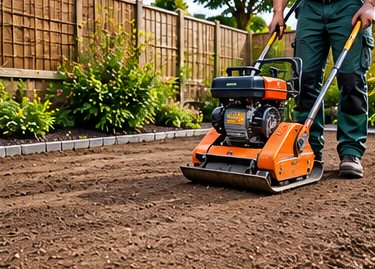
Lawn Levelling, Renovation and Patch Repairs Explained
Why lawns go lumpy, patchy or mossy, and how levelling, scarifying, aeration, overseeding and repairs put them right.
Read the guide
Clearing and Preparing a Garden Before Landscaping Starts
Strip-out, excavation, levelling, drainage and sequencing: the preparation that decides how a new patio, driveway, lawn or fence turns out.
Read the guidePlanning turfing & lawns?
Send a few details and we will arrange a free site visit. Photos on WhatsApp help us understand the job before we visit.
Get a free quote
Tell us a little about the job and we will come back to you shortly.