
Low Maintenance Planting: Ground Cover, Mulch and Easy Plants
How to plan easy-care planting with the right plants, ground cover, mulch and watering habits, and what membranes can and cannot do.
Planting is where low maintenance gardens often go wrong. People remove a lawn, lay a membrane and add a few shrubs, then find the weeds return, half the plants struggle and the borders take more effort than before. The cause is rarely the idea itself. It is usually the choice of plant, the position or the preparation.
This article sets out the principles of easy planting: matching plants to the conditions, using ground cover and mulch to keep weeds down, understanding the trade-offs of weed membrane, building evergreen structure, choosing perennials, grasses and shrubs that need little pruning, and setting up a simple watering routine. It deals in general plant types rather than specific varieties.
Right plant, right place
The single biggest saver of effort is choosing plants that suit the conditions you have. Look at how much sun a bed gets, whether the soil is usually wet or dry, how exposed the spot is and how much space the plant needs when mature. A plant that is happy needs little attention. One that is struggling needs constant feeding, watering and replacing.
Read plant labels carefully and check the final size. A small shrub that grows large will need regular pruning or removal, which defeats the object. When unsure, look at what thrives in nearby gardens of similar aspect and ask the garden centre for advice on your conditions.
Think about how the bed will look across the seasons, not just on planting day. Combining evergreen shrubs with a few perennials and grasses means there is always something to look at, and no single plant has to perform all year.
Prepare the ground properly
Weeds you leave in the ground will come back through any mulch or membrane. Remove perennial weeds with their roots before planting, and if the area is overgrown, clear it first. Japanese knotweed and giant hogweed need specialist handling and should never be cut or strimmed, so raise any suspicion before work begins.
Loosen compacted soil and add organic matter where the soil is poor. Good preparation helps plants establish quickly, and an established plant out-competes weeds and needs less water. Rushing this stage is the most common false economy in planting.
Ground cover that earns its place
Ground cover plants spread to form a dense layer that shades the soil, leaving less room for weeds. They work well when planted close enough to knit together within a couple of seasons and kept weeded while they establish.
Not every ground cover is well behaved. Some spread aggressively and can swamp neighbours or creep into lawns and paving. Choose types suited to the situation, such as shade-tolerant ones under trees and sun-loving ones on open borders, and be prepared to trim the edges once or twice a year.
Ground cover is most useful in awkward places, such as under shrubs, beside paths or on a bank where mowing is difficult. It softens the edges of hard landscaping and covers bare earth around newly planted shrubs while they grow.
- Plant in groups rather than single specimens to cover ground faster.
- Weed carefully until the plants have joined up.
- Check the spreading habit before choosing, especially near lawns and paving.
- Match shade and sun tolerance to the bed.
Mulch and weed membrane: the trade-offs
A layer of mulch, such as bark, chipped wood or composted material, keeps soil moist, suppresses weeds and improves the soil as it breaks down. It needs topping up every year or two, and it should be kept clear of plant stems. Decorative gravel or stone can also be used but does not feed the soil.
Weed membrane is useful but often oversold. Under gravel, it slows weeds and keeps stone separate from soil. In planted borders, however, it can stop organic mulch feeding the soil, restrict self-sowing and spreading plants, and create a thin layer of debris on top where weeds still germinate. Over time membrane can become exposed and untidy. A thick organic mulch over well-cleared soil is often the better choice for planted beds, while membrane makes most sense under hard landscaping and gravel paths.
Evergreens, perennials, grasses and shrubs
Evergreen structure holds a garden together in winter. A few evergreen shrubs, clipped or left natural, give shape through the year, and they can be arranged so that seasonal plants fill the gaps. Shrubs that need little pruning, grown to a suitable size, keep effort low. Many only need a tidy once a year after flowering.
Hardy perennials return each spring and are usually cut back once, in late winter or early spring. Ornamental grasses give movement and texture and are generally cut back annually. Plant them in drifts for a natural look and for easier weeding. Bulbs add colour with little work once they are in the ground.
- Choose shrubs whose mature size fits the space.
- Use evergreens for structure and perennials and grasses for seasonal interest.
- Cut perennials and grasses back once a year rather than constantly deadheading.
- Avoid plants that need staking, regular dividing or frequent feeding.
Watering and ongoing routines
New plants need regular, deep watering in their first year while roots establish, especially in dry spells. Water thoroughly and less often, so roots grow downwards, rather than giving a daily sprinkle. After the first season, many well-chosen plants cope with little extra water, though containers always need more.
A simple yearly routine covers most borders: weed in spring, mulch, trim and prune where needed, cut back perennials and grasses, and tidy in autumn. If you would like help with groundwork, edging, paths or clearing before planting, we offer a free site visit and quote in Worcester and the surrounding area.
A drip hose or soaker laid under the mulch makes watering quicker and wastes less, and a timer takes the job off your hands in dry spells. A water butt on a downpipe gives a free supply for pots and new plants.
Common planting mistakes
Most disappointing borders share a handful of avoidable problems. Spotting them early makes the difference between a border that gets easier each year and one that always seems to need rescuing.
- Planting too thinly, leaving gaps where weeds take hold.
- Choosing fast growers that need constant cutting back.
- Planting too deep or piling mulch against stems, which can cause rot.
- Mixing plants with very different needs in the same bed.
- Relying on membrane alone and ignoring perennial weeds beneath it.
- Forgetting that new plants need watering in their first year, even when chosen to be tough.
Common questions
Does weed membrane stop all weeds?
No. It slows weeds growing up from below, but seeds landing on top of the mulch or gravel can still germinate. Perennial weeds should be removed by hand first, and some light weeding will still be needed.
How often should I top up mulch?
Organic mulch breaks down and thins over time, so most borders benefit from a fresh layer every year or two. Keep it clear of stems and trunks to avoid rot.
What is the lowest-effort type of planting?
A mix of evergreen shrubs, ground cover and robust perennials or grasses, planted in the right conditions and mulched, takes the least effort. Success depends more on matching plants to the site than on any single plant choice.
Keep reading
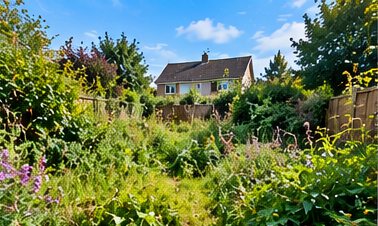
Clearing and Preparing a Garden Before Landscaping Starts
Strip-out, excavation, levelling, drainage and sequencing: the preparation that decides how a new patio, driveway, lawn or fence turns out.
Read the guide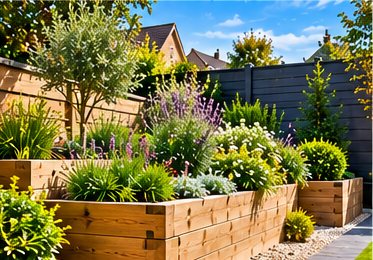
What Makes a Garden Low Maintenance? An Honest Guide
No garden is maintenance-free, but you can design out most of the repetitive jobs. Here is what takes time and how to reduce it.
Read the guideLow Maintenance Front Gardens: Gravel, Paving and Planting
How to balance parking, gravel, paving, planters and planting in a front garden that looks good with little upkeep.
Read the guidePlanning low maintenance gardens?
Send a few details and we will arrange a free site visit. Photos on WhatsApp help us understand the job before we visit.
Get a free quote
Tell us a little about the job and we will come back to you shortly.