
Garden Edging Options Compared: Brick, Metal, Timber and More
A practical comparison of garden edging materials, where each works, how it is installed and how to keep lawn edges tidy.
Edging does a quiet but important job. It keeps lawn from creeping into borders, gravel from spilling onto grass and paths from slowly spreading into the soil beside them. A good edge makes a garden look finished; a poor one makes it look tired within a season or two.
No single edging suits every situation. This guide compares the main options, explains what each is good and bad at, and covers installation details such as depth and haunching, which decide whether the edge stays straight.
What an edge actually has to do
Before choosing a material, decide what the edge is for. Separating gravel from a lawn needs a firm, upstanding barrier. Keeping grass out of a border needs a smooth, mowable line. Supporting the edge of a path needs real strength, since it takes foot traffic and sometimes wheelbarrows.
Think also about the line. Straight formal edges suit rigid materials such as brick, stone and steel, while curves are easier with flexible strips, thin metal or small setts. Planning the shape first stops you picking something that fights the design.
Think about maintenance as well as looks. A hard edge beside a lawn lets you mow without trimming, while a shallow edge that sits above the grass will need strimming. Choose the one that suits the way you look after the garden, not just how it looks on day one.
Brick, concrete and stone setts
Brick and block edging is classic and strong. Laid on a bed of concrete, as a soldier course (upright, end to end) or a flat row, it supports paths and gravel firmly and can match nearby paving. Concrete edging strips and kerbs are sturdier still, and they are the usual choice where the edge carries real load. Stone setts, either natural or cast, give a traditional look and cope well with curves when they are small.
The trade-off is effort. Rigid edgings need a trench, a concrete bed and haunching, so they take longer to install than a strip pushed into the ground. They also need accurate levels so water does not pond along them.
Effort and lifespan sit in a rough order from flexible strip at one end through timber and metal to masonry at the other. Rigid masonry takes the longest to fit but is the one you are least likely to touch again.
- Brick and block: durable, matches paving, suits paths and drives.
- Concrete: very strong, suits load-bearing and straight edges.
- Stone setts: traditional, suits curves and cottage-style gardens.
- All three: need a proper bed and haunching to stay put.
Metal and timber
Steel and aluminium edging is slim and crisp. It disappears visually, leaving gravel, lawn and borders to speak for themselves, and it bends smoothly to follow curves. It is excellent for dividing gravel from lawn and for edging beds, but it is not intended to carry heavy traffic, and thin sections can be sharp at the top, so mind small feet and bare hands. Weathering steel develops a rust-coloured finish that suits many gardens.
Timber edging, from treated boards to rounded log rolls, gives a softer, more natural look and works well around vegetable beds and informal borders. It needs fixing to stakes, it will not last as long as masonry or metal, and it can rot where it meets damp soil. Choose a suitable treated grade and expect to replace it eventually.
Finish and colour matter too. Dark steel disappears against planting, while pale stone draws the eye. Whichever you choose, keep the number of materials in one garden small so the edges feel part of one design.
Flexible and plastic edging
Flexible edging, usually rubber or plastic, is the easiest to fit and follows any curve. It holds back gravel and bark and gives a basic line, and it is fine for a quick border job. Its limits are strength and appearance: it can lift or ripple in frost, may be pulled out by a mower, and tends to look thin next to proper materials.
Use it where the load is light and the line is more important than the strength, and fix it properly with the pegs supplied. On a firm path edge or beside a drive, a rigid edge is a better long-term answer.
Where pegs are provided, use all of them and sink them below the level of the top edge so they do not catch the mower. A little time spent on fixing makes the difference between an edge that stays put and one that is lifted by the first frost.
Choosing by location
Match the edge to the place rather than picking a favourite material for the whole garden. A mixture is fine as long as the materials relate to each other.
Mixed materials work well when there is a reason for them. For example, a brick path edge beside a gravel bed that is itself separated from the lawn by a steel strip uses each material where it is strongest.
- Lawn to border: metal, mowing edge in brick or stone, or a clean cut with a spade.
- Lawn to gravel: steel or aluminium strip, or a flush brick course.
- Path edge: brick, block or concrete on a haunched bed.
- Vegetable beds and informal borders: timber boards or log rolls.
- Curves: flexible strip, thin metal or small setts.
Installation, haunching and keeping lawns neat
Rigid edges need a trench to the right depth, a compacted base, a bed of mortar or concrete, and haunching (a wedge of concrete) at the back to hold the units. For a mowing edge, set the top of the brick or stone slightly below the lawn, so the mower wheel can run over it and you do not need to trim by hand. Keep levels consistent, since a wavy edge looks worse than no edge.
Even good edging needs a little upkeep. Trim the grass edge every so often, clear soil that builds up on the top, and check for movement after winter. If you want a tidy finish that lasts, we handle groundwork, laying and finishing ourselves and can advise at a free site visit.
If you are replacing an old edge, lift it fully and look at the ground underneath. Removing the old material often reveals a soft base or a roots problem that would undermine the new edge.
Common questions
What is the longest-lasting garden edging?
Concrete, brick, stone and metal edgings set on a proper bed usually outlast timber and plastic. How long any edging lasts depends on the installation as much as the material.
How do I stop gravel spilling onto my lawn?
Use a firm edge that stands slightly above the gravel level, such as steel strip or a bedded brick course, and set the lawn side a little lower so the mower clears it. A membrane under the gravel helps but does not replace the edge.
Do I need concrete for garden edging?
For paths, drives and any edge that takes weight, yes, a concrete bed and haunching keep it straight. For light border edging, pegged strips or timber boards can be enough.
Keep reading
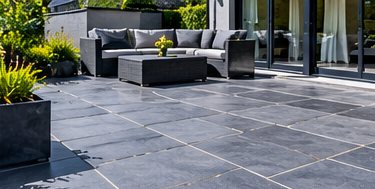
Garden Path and Stepping Stone Ideas: Materials and Layout
Compare path materials, widths, curves and foundations so your garden path works for bins, wheelchairs and everyday use.
Read the guide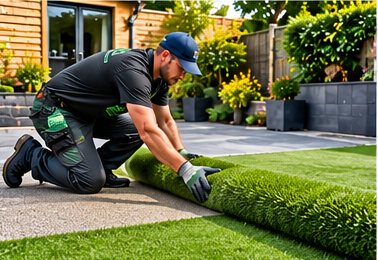
Lawn Edging and Borders: Options That Keep a Lawn Neat
How to choose lawn edging that stays crisp, from a simple cut edge to metal, timber or brick, with notes on curves and mowing.
Read the guide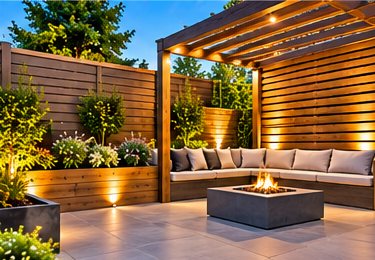
Retaining Walls, Raised Beds and Sleepers Explained
Retaining walls, sleepers, raised beds, steps and edging: materials, limits, drainage and when to call an engineer.
Read the guidePlanning hardscaping?
Send a few details and we will arrange a free site visit. Photos on WhatsApp help us understand the job before we visit.
Get a free quote
Tell us a little about the job and we will come back to you shortly.