
Hedge, Bramble and Ivy Removal: Methods and What to Expect
How leylandii, laurel, bramble, ivy, bamboo and other tough plants are removed, and why roots and regrowth decide how long the job takes.
Cutting a hedge or bramble thicket down is the easy part. The real work is in the roots, the waste and making sure the plant does not simply grow back in a couple of seasons. Some plants are also better left alone until you know what they are, and nesting birds and invasive species change how and when you can work.
This guide looks at the plants that most often need removing from UK gardens, the methods used for each, what to do about stumps and roots, and the points where you should stop and get advice first.
Overgrown hedges: leylandii, laurel, privet and conifers
Overgrown hedge removal begins with a decision: reduce it or take it out. Privet and laurel often regrow from hard cutting, so a hedge that has simply got too tall can sometimes be brought back down. Leylandii and most other conifers generally do not regrow from bare wood, so cutting into the brown, leafless centre usually leaves permanent gaps. If a conifer hedge is past reducing, removal is often the realistic option.
Removing a hedge normally means cutting it down in sections, chipping or carting away the branches, and then dealing with the stumps. Leylandii removal in particular produces a great deal of waste and a lot of root, so access for people and a vehicle matters. Hedges that were planted close to a wall, fence or drain deserve extra care, as roots can sit close to pipes and foundations and are worth locating before any digging. If the hedge stands on a boundary, it is worth talking to your neighbour first, and title deeds show who owns what.
Hedge root removal and stump grinding
Once the top growth has gone, you are left with stumps and root plates. There are three common options, and the right one depends on what happens to the space next.
- Stump grinding: a machine grinds the stump down below ground level. It is fast and leaves the main stump gone, though some woody root remains in the soil and the area is filled with shavings and soil.
- Digging out: stumps and larger roots are excavated by hand or with a small digger. This is more disruptive but gives the cleanest result where you are building, paving or fencing.
- Cut low and leave: the stump is cut close to the ground and left to rot. It is the least work, but it is slow and not suitable under paving, a driveway or a new lawn.
Bramble and blackberry clearance
Bramble clearance and blackberry bush removal are never a one-cut job. Brambles root where the arching stems touch the ground, and they regrow from the crown and from root fragments. The usual method is to cut the stems back with loppers or a brushcutter, remove all the cut material, and then dig out the crowns, which are the woody bases where the stems join the roots.
Any root left in the soil will sprout again, so the ground needs checking, and often a second tidy a few weeks later. In large patches, a suitable weed treatment applied to fresh regrowth can help, as long as it is used according to the product instructions. Wear thick gloves and eye protection, because bramble thorns are tougher than most people expect.
Ivy clearance and removal
Ivy is useful for wildlife but difficult on buildings, fences and trees. On a sound brick wall it is mainly a nuisance, yet on weak mortar, render, timber fencing, roofs and gutters it can cause damage or hide existing problems. On trees, heavy ivy adds weight and wind resistance, although it does not usually kill a healthy tree.
For careful ivy removal, cut the stems at the base, leave the upper growth to die back and loosen over several weeks, and then pull away what comes easily. Tearing ivy off a wall can pull out mortar or render, and the small root hairs left behind can be scrubbed or left to fade. Keep an eye out for nesting birds in thick ivy.
Saplings, buddleia, rhododendron and bamboo
Self-seeded saplings such as sycamore and ash are easiest to remove while small, by pulling or digging. Larger ones need cutting and stump treatment or grinding. Buddleia grows quickly from wall tops and gaps and regrows if the roots stay in.
Rhododendron clearance often involves large, dense root balls that are heavy to lift, so a machine is normally needed. Bamboo is the one to take most seriously. Many types spread by underground rhizomes, and bamboo removal is not a quick job: the canes are cut and removed, then the rhizomes have to be dug out piece by piece, and fresh shoots are expected for a season or two. If you plan to build or pave where bamboo has been, say so, because rhizome fragments can push through weak surfaces.
Quick reference: which plant needs what
The same job looks different depending on the plant, so it helps to set your expectations before you start.
- Leylandii and conifers: cut down in sections, grind or dig out stumps, expect plenty of waste.
- Laurel and privet: may regrow, so decide between reduction and full removal.
- Bramble: cut back, dig out the crowns, check for regrowth.
- Ivy: cut at the base and let it die back before pulling it off.
- Bamboo: dig out rhizomes and expect shoots to reappear for a season or two.
- Buddleia and rhododendron: remove roots fully, as both regrow from what is left.
Nesting birds, knotweed and giant hogweed
It is widely accepted good practice to avoid cutting hedges and clearing dense shrubs and trees during the main bird nesting season, which runs through spring and into summer. Before any hedge or thick cover is cut at other times, it should be checked for active nests. If a nest is found, that section is left until the young have gone. This is advice rather than a legal reference, so check with your local council or a wildlife body if you are unsure. Autumn and winter are therefore the usual times for major hedge and shrub removal, which also suits the ground for stump work.
Japanese knotweed and giant hogweed need specialist handling. Do not cut, strim, dig or pull either one, because disturbing them can spread them, and giant hogweed sap can cause painful skin reactions in sunlight. If you suspect either plant, tell us before any work begins so the area can be left alone until it has been properly identified and dealt with.
Regrowth control for everything else comes down to removing as much root as possible, keeping the ground covered or planted soon after, and checking regularly for new shoots. We can look at your plot, talk through the plants and offer a free site visit across Worcester and Worcestershire.
Common questions
Can you cut a leylandii hedge right back to the bare wood?
Usually not safely, because most conifers do not regrow from old brown wood and may leave permanent gaps. Reducing the outer green growth gradually can work, but if the hedge is too tall or bare, removal and replacement is often more realistic.
Do I need to remove the stump as well?
Not always. If nothing is going to be built or laid there, a low stump can be left, but it is slow to rot and may sprout. Under a patio, driveway, lawn or fence line, grinding or digging out the stump is normally the right call.
Will brambles and ivy grow back after clearance?
They can, if roots or crowns are left behind. Thorough root removal, a follow-up check and quickly covering the ground with turf, planting, mulch or paving reduce regrowth considerably.
Keep reading
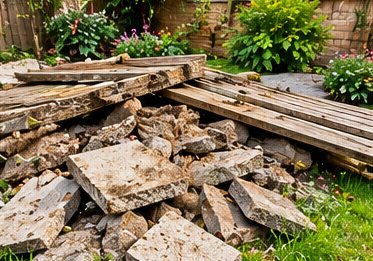
Overgrown Garden Clearance: How the Job Is Done Step by Step
A practical walk-through of how a neglected, overgrown garden is assessed, cleared, sorted and left ready for its next stage.
Read the guide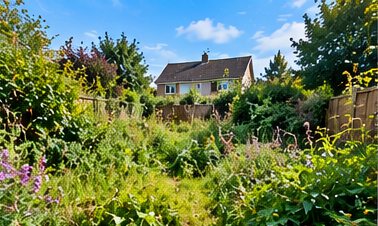
Clearing and Preparing a Garden Before Landscaping Starts
Strip-out, excavation, levelling, drainage and sequencing: the preparation that decides how a new patio, driveway, lawn or fence turns out.
Read the guide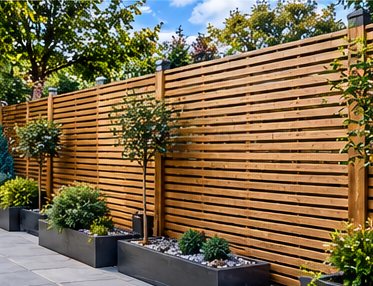
Fence Height and Boundary Rules in England: What to Check First
What to check before fitting or replacing a boundary fence in England: height limits, ownership, neighbours, slopes and access.
Read the guidePlanning garden clearance?
Send a few details and we will arrange a free site visit. Photos on WhatsApp help us understand the job before we visit.
Get a free quote
Tell us a little about the job and we will come back to you shortly.