
Repairing Storm-Damaged Fences: Posts, Panels and Rails
Why fences fail in wind, how to check which posts are going, and when to repair, reinforce or replace.
After a windy night, a fence that has been quietly deteriorating for a long time can suddenly lean, split or fall. The storm gets the blame, but the cause is usually something that was already weak: a rotten post base, a missing gravel board or loose fixings. Knowing what actually failed tells you whether a repair will hold or whether you are patching a fence that is nearly finished.
This guide explains the common causes of wind-damaged fence repairs, how to check which posts are failing, the main repair options, when full replacement makes more sense, and what to do in the first hours when a fence is down.
Why fences fail
A solid fence acts like a sail, so wind load goes straight into the posts. If the posts are sound and set deeply, the fence takes it. If the post bases have rotted, the first strong gust can snap them at ground level, even though the panels look fine.
Other causes are often combined: panels sitting on wet soil, fixings that have worked loose, rails that have split, or ground movement after heavy rain that lets posts drift out of line.
- Rotten post bases, the most common failure at ground level.
- Wind load on solid panels with weak or shallow posts.
- Missing or rotten gravel boards letting panels soak up moisture.
- Loose nails, screws or brackets.
- Leaning caused by soft or moving ground.
- Climbers or heavy planting adding weight and wind resistance.
Make it safe first
If a section is down or hanging, deal with safety before repairs. Keep children and pets away, and take care with exposed nails, splinters and broken boards. Panels that are still partly attached can fall without warning, so do not lean on or climb them.
For a temporary measure, a fallen panel can be lifted clear and laid flat, or a leaning section can be braced with a timber prop on your own side. This is only a stopgap. Do not attempt to lift heavy concrete posts or large panels alone, and do not work in strong wind. If the fence is a shared boundary, let your neighbour know what has happened, since their side may be affected and they may want to help decide the next step.
Checking which posts are failing
You can learn a lot in a few minutes. Push gently at each post and see whether it moves at the base or bends higher up. Look at ground level for soft, dark or crumbling timber, and probe with a screwdriver. If the point sinks in easily, the wood is rotten.
Check rails and panels as well as posts: a rail that has pulled away from its post, or a panel with a cracked frame, will not take another gale however good the post is. Check the lines too. Sight along the fence for leaning or bowing, look for gaps opening at the post and rail joints, and note which sections moved together. One failed post often means its neighbours are suspect, since they are the same age and have had the same conditions.
- Push each post at the top and watch the base for movement.
- Probe the timber at ground level with a screwdriver.
- Look for rails pulled away from posts.
- Check panel frames for cracks and loose nails.
- Note which posts lean and in which direction.
Repair options, from panel to post
Where only a panel is broken, a broken fence panel replacement is straightforward if the posts are sound and the panel size matches. On closeboard, damaged feather edge board replacement is simple, and a split or rotten rail can be swapped without rebuilding. Loose fixings can be replaced with galvanised or coated screws, and fresh brackets used where the old ones have failed.
Where a post has rotted at the base but is otherwise sound, a concrete repair spur can be fixed alongside it. A concrete repair spur installation means digging a hole beside the post, setting a short concrete post in the ground, and bolting the old post to it. It saves lifting the whole panel run, though it only works if the original post above ground is still solid. Fitting a gravel board at the same time protects the base from the damp that caused the rot in the first place.
For a leaning post in solid condition, straightening it, re-setting it in fresh concrete and propping until it cures can work. Where the post is rotten through, a rotten fence post replacement is the better answer, and a collapsed fence repair may mean rebuilding the full run. Fence post straightening is not a fix for rot: it only holds if the post and its footing are sound, and a post that has been pushed back upright without addressing the cause will usually lean again in the next strong wind.
Repair or replace the whole fence?
Repair makes sense when the damage is limited, the other posts are sound and the panels are in decent condition. Replacement makes more sense when many posts are rotten, panels are brittle, or the fence has had repeated repairs. A run of new panels fixed to old weak posts will simply fail again.
Think about the whole boundary. If one section needed repair because of exposure, the rest probably has similar wear. A consistent new run, with better posts and gravel boards, often saves repeated call-outs, and a mix of old and new can look patchy. Ask whoever quotes to explain which posts they would keep and why, so you can judge the answer for yourself.
Insurance and evidence
Some home insurance policies cover storm damage to fences, and others exclude it or limit it, so policies differ and it is worth reading yours. Before clearing anything, take clear dated photos of the damage, the surrounding area and anything that fell. Keep any removed pieces until the insurer has seen what they need.
A fence that failed because of long-term rot may be treated differently from one broken by a sudden storm, and whose fence it is matters too. Ask your insurer rather than assuming, and keep any invoice for the work in case it is needed.
Old fence removal and waste disposal
Taking out a failed fence produces bulky waste: old panels, rotten posts and concrete bases. Posts set in concrete can be heavy and awkward to dig out. Waste carriers must dispose of waste responsibly, so use a registered carrier and ask to see proof if someone else clears it for you. Broken timber should not be left in a skip bag at the roadside or burned in the garden, and concrete should be kept separate where possible because it is heavy and handled differently.
We handle old fence removal and waste removal as part of the job, alongside groundwork and fitting, and can look at the damage on a free site visit and quote.
Common questions
Can a leaning fence post be straightened?
Sometimes. If the post is solid and the leaning comes from loose concrete or soft ground, it can often be reset and propped until fresh concrete cures. If the base has rotted, replacement or a concrete repair spur is more reliable.
What is a concrete repair spur?
It is a short concrete post set in the ground beside a rotten timber post and bolted to it. It restores support at ground level without replacing the whole post and panel run. It only works if the timber above the rot is still sound.
Will my home insurance pay for a storm-damaged fence?
It depends on your policy, which may cover, limit or exclude fences. Take photos before anything is moved, keep any damaged pieces, and check the terms or ask your insurer.
Keep reading
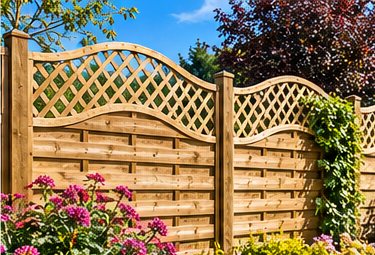
Types of Garden Fencing Explained: Styles, Privacy and Upkeep
A plain guide to the main garden fence styles, covering looks, privacy, strength, upkeep and where each one makes sense.
Read the guide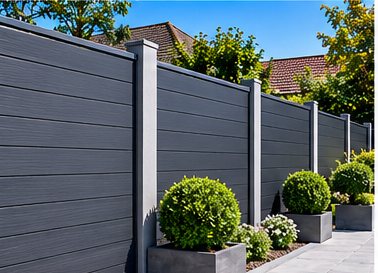
Timber or Composite Fencing: Which Lasts Longer in a Garden?
An honest comparison of timber and composite fencing covering rot, staining, fade, wind load, posts and repairs.
Read the guide
Garden Gates: Types, Fitting, Hardware and Common Repairs
Gate types, openings, posts, hinges, latches and locks, plus why gates sag and how to prepare for automation.
Read the guidePlanning fencing?
Send a few details and we will arrange a free site visit. Photos on WhatsApp help us understand the job before we visit.
Get a free quote
Tell us a little about the job and we will come back to you shortly.