
Natural Stone Paving Types Explained for Patios and Paths
A reference guide to natural and manufactured paving types, with the character and caveats of each.
Paving names can be confusing. Sandstone varieties have colour names, limestone and slate come from different countries, and concrete slabs are sold in finishes that imitate stone. Choosing well means knowing what each material is, how it behaves outdoors and what trade-offs come with it.
This reference guide walks through the main options for patios and paths, with the character and caveats of each. We do not rank any stone as the most durable in absolute terms, because it depends on the specific product, the thickness and how well it is laid.
Indian sandstone and its varieties
Indian sandstone is the most common choice for natural sandstone patios in the UK. It is usually riven, meaning split along the grain, which gives a textured surface with decent grip. Slabs are sold in set sizes that can be laid in a pattern, and thickness and flatness vary between suppliers, so ask to see the product before you order.
Named varieties give a rough guide to colour, although individual batches differ. Raj Green and Mint Fossil tend to be the livelier mixes, while Kandla Grey is calmer. Buying everything for a patio in one go helps, because later orders may not match the first pallets exactly. Sandstone also tends to look darker and richer when wet and lighter when dry, so judge samples in both states.
- Raj Green: a mix of greens, greys and buff tones, with a lively, variable look.
- Kandla Grey: a cooler grey with brown and buff flecks, popular for contemporary schemes.
- Autumn Brown: warm browns, rust and gold, which suit brick houses and traditional gardens.
- Rippon Buff: softer buff and cream tones, often chosen for a lighter, gentler appearance.
- Mint Fossil: pale colours with fossil-like markings that give the surface a distinctive pattern.
Limestone, slate and granite
Limestone has a finer, more even grain than sandstone. Indian limestone is often grey or buff, black limestone gives a deep, formal tone, and Kota Blue is a dark blue-grey that looks striking when wet. Limestone can react to acidic cleaners, so check what is safe to use on it.
Brazilian slate is dark and layered, with a subtle sparkle and a naturally textured face. It can show dust and water marks on dark surfaces and can flake at the edges. Granite is a very hard, dense stone, used as sawn paving, as granite setts or as kerbs and edging. It is hard to cut, so detailed shapes take longer.
Slate and dark limestone look sharp in a modern courtyard, but dark surfaces show up bird droppings, leaf marks and dried water, and they can become hot underfoot in strong sun. Granite is usually speckled and tends to hide dirt better, though smooth polished or flamed finishes differ a lot in grip, so ask which finish is on offer.
Travertine, Yorkstone and reclaimed stone
Travertine has a warm, creamy character and a natural pitted surface that is often filled. It is popular around pools and terraces, but it can feel cool and may need care in freeze-thaw conditions, so ask about suitability for outdoor use in the UK.
Yorkstone is a traditional English sandstone with a refined, weathered look. Reclaimed Yorkstone has already aged, which gives instant character, but the slabs vary in thickness and flatness, so laying takes more time and skill. Reclaimed slabs in general suit period properties and heritage-style gardens, though supply and consistency are less predictable than with new products. Because reclaimed pieces differ in size, they are often laid in a random pattern with a mortar joint that absorbs the differences, and it is sensible to allow extra time for sorting and trimming. Old slabs may also carry staining, tar or lime residue from their previous life, so inspect them before they are bought.
Concrete slabs and decorative paving
Concrete paving comes in riven, smooth and textured finishes, often designed to imitate stone. It is made to consistent sizes, which makes laying quicker and more predictable, and colours are uniform. Over time, surface colour may soften, and chips can show the grey body beneath, so it ages differently from natural stone.
It is a practical option where a plain, tidy surface is the aim, and it can be used alongside setts or bricks for borders and detailing. Concrete paving is not a poor relation: good concrete paving is well made and consistent, but thin or poorly cast slabs can crack or wear at the surface, so thickness and manufacturer guidance matter. Reclaimed concrete slabs, such as old garden paving, can be reused for paths and shed bases if they are sound and relaid on a proper base.
Cobbles, setts, brick and block
Setts and cobbles are small unit paving, good for curves, borders and driveways. Granite setts are common, while cobbles have a rounded, rustic look but are uncomfortable to walk on, so they work better as accents than as seating areas. Smaller units need a firm base and tight edge restraints to stay in place.
Clay brick and concrete block paving suit patios, paths and edging. They are flexible, repairable one unit at a time and good for patterns such as herringbone. Joints are usually filled with sand, so weeds and moss need occasional attention.
Both can be laid in curves, circles and borders more easily than large slabs, and both make a sensible edging for a larger area of different paving. Block can lift or sink if the base is poor, but individual units can be taken up and relaid, which is a real advantage over a single large slab.
Crazy paving and how to choose
Crazy paving uses irregular broken pieces, often of stone, laid in a loose mosaic. It can look charming in cottage-style gardens, but it needs skilled cutting and plenty of jointing, and the many joints mean more upkeep.
When choosing, consider the style of the house, how much shade the area gets, whether you want a pattern, and who will use the surface. Ask for samples, check the product's intended outdoor use, and compare thickness and flatness. We cover groundwork, laying and finishing ourselves, and can talk you through samples during a free site visit.
- Look at full slabs, not just small samples.
- Check whether the stone is suited to freeze-thaw conditions.
- Ask about the sealing needs of lighter stone.
- Consider grip in shaded, damp spots.
Common questions
Which natural stone is the most durable?
It depends on the product, thickness and how it is laid, so no single stone wins in every case. Granite and dense sandstone are generally hard-wearing, but a poorly prepared base will cause problems with any material.
Is Indian sandstone suitable for the UK climate?
Good quality sandstone is widely used in UK gardens and copes well with normal weather. Quality varies between batches, so buy from a reputable source and make sure the slabs are laid on a sound, draining base.
Can I mix different paving types in one patio?
Yes, and it often looks good, such as stone slabs with a sett border. Keep thicknesses and bedding methods compatible so that levels meet cleanly.
Keep reading
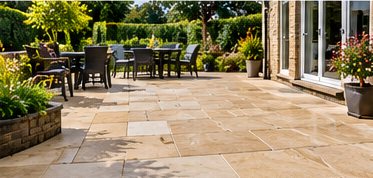
Porcelain or Natural Stone Patio: Which Should You Choose?
How porcelain, Indian sandstone and other natural stone compare for looks, grip, staining, laying and ageing.
Read the guide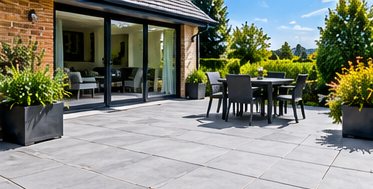
Patio Drainage, Levels and Foundations Explained Simply
Why falls, sub-base and drainage decide whether a patio lasts, plus notes on raised patios, retaining walls and steps.
Read the guide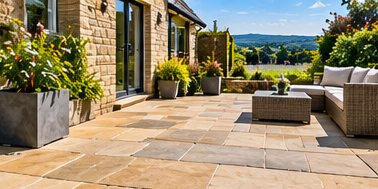
How a Patio Is Laid: New Patio Construction Step by Step
A step-by-step walk through new patio construction, from set-out to jointing, plus paths and extensions.
Read the guidePlanning patios & pathways?
Send a few details and we will arrange a free site visit. Photos on WhatsApp help us understand the job before we visit.
Get a free quote
Tell us a little about the job and we will come back to you shortly.