
Cleaning, Sealing and Repointing a Patio: A Practical Guide
How to clean, seal, repoint and repair a patio, and when relaying or replacement makes more sense.
Patios do not need much, but they do need something. Algae turns paving green and slippery, joints crumble, weeds push through and the odd slab starts to rock. Catching these early keeps a repair small.
This guide covers patio cleaning, pressure washing, sealing, repointing, regrouting and relaying, and helps you decide between repair, renovation and replacement.
Cleaning without causing damage
Start gently. Sweep off debris, then scrub with a stiff brush and a mild soap or a cleaner made for patios. Many greasy marks lift with warm water and a little detergent. Work in sections and rinse thoroughly so no residue remains.
Check what suits your paving first. Limestone can be harmed by acidic products, and some bleach-based cleaners discolour stone or kill nearby plants. Test any product on a hidden corner before using it across the surface.
Time of year matters. Cleaning in mild, overcast weather lets cleaners work without drying too quickly, and avoiding hard frost prevents wet paving from freezing into a skating surface. Protect plants nearby with a rinse beforehand, and keep run-off away from lawns and borders where you can. Moving furniture and planters off the patio before you start makes it far easier to do a thorough job, and lets you see which areas hold water after rain. Those damp patches are often where algae returns first, so they tell you where drainage or pruning may help more than extra scrubbing.
Pressure washing: use with care
Patio pressure washing is quick, and it can also do damage. High pressure used too close can etch the surface, strip the face off softer sandstone, leave stripes and blast the jointing out of the gaps. A fan nozzle, a moderate pressure and a steady distance help.
Keep the jet away from joints and wall bases, and avoid spraying water at doors, airbricks or windows. On sand-filled paving, expect to refill the joints after washing. Porcelain tolerates washing better than soft stone, but joints still need protecting.
If you would rather not do it yourself, a professional clean can be combined with repointing and re-sanding in a single visit. For stubborn marks, such as rust, oil or paint, specialist stain removers exist, and each works on specific stains, so identify the stain first and follow the label.
Algae, moss and weeds
Green growth thrives in shade and where water lies. A moss and algae treatment applied in mild, damp weather works slowly, so allow time before brushing off. Removing the cause helps as much as the treatment: trim overhanging branches, clear leaf litter and check that the surface drains.
Weeds in joints need pulling or scraping out while they are small. Rather than letting seeds settle in crumbling joints, refill gaps so there is nothing for them to root in. Weedkiller used in joints can run into borders and lawns, so use it sparingly and follow the label. Hand tools are slower but safe for nearby plants, and a joint brush or knife used early in the season stops roots taking hold, and weeds that return quickly in the same spot often point to a damp, shaded or poorly drained area worth addressing.
- Brush leaves away regularly, especially in autumn.
- Treat algae before it builds into a slippery layer.
- Keep gutters and downpipes clear so water does not run across the patio.
- Refill joints that have opened.
Sealing: when it helps and when it does not
Sealing can reduce staining, slow the return of algae and make cleaning easier, particularly on porous, light-coloured natural stone. Some sealers darken the colour or leave a sheen, so test a small area first. A seal wears off, so it is a repeated job.
Porcelain generally does not need sealing, because it absorbs so little water. Sealing the joints, not the tiles, may be what matters there. Sealing must only happen on a clean, fully dry surface in suitable weather, or it can trap moisture and turn cloudy. Jointing sand and resin joint fillers can also be sealed or stabilised, which helps keep joints in place, but the surface should be cleaned first. Before sealing a stone patio, ask yourself what problem you are solving. If you like the weathered look, you may be happy to skip it.
Repointing, regrouting and relaying
Patio repointing replaces cracked or missing mortar joints. The old material is raked out to a suitable depth, the gaps are brushed clean, and fresh mortar is pressed in and finished without smearing. Mortar mixed to a different colour or strength can look patchy or crack away, so test a small area and allow it to cure out of rain and frost. Repointing is best done on a dry, mild day, and the surface should be damp-free and brushed clean so the new mortar bonds. Patio grouting and jointing on porcelain follows the same idea, using a compound suited to the tile.
Patio relaying is needed when slabs sink, tilt or rock. The cause matters more than the symptom: if the base is soft or water is collecting underneath, re-bedding the slabs on the same base will fail again. The slabs are lifted, the base is repaired and compacted, and the paving is relaid on full bedding.
- Cracked joints: rake out and repoint.
- Isolated rocking slab: lift and re-bed on full mortar.
- Whole area sunk: investigate drainage and sub-base before relaying.
- Broken slabs: replace with a close match where possible.
Repair, renovation or replacement
Cleaning, repointing and sealing often revive a tired patio. Patio repairs make sense when the base is sound and the damage is limited to a few areas. Patio renovation and replacement come into question when the base has failed across large areas, levels are wrong, falls send water towards the house, or the paving is badly worn. Replacement does not always mean throwing everything away. Sound stone slabs can often be lifted, cleaned and relaid on a new base, which keeps the character of the original paving while correcting the groundwork. Cracked porcelain and broken slabs are harder to patch invisibly, so allow for some visible difference or replace a whole row for a tidier result. Whichever route you take, photograph the patio before and after the work and note which products were used, so future repointing or cleaning can match them.
For paving repairs and restoration we can inspect the patio, check the base and drainage, and explain whether repair or replacement is sensible. We offer a free site visit in Worcester and surrounding Worcestershire towns.
Common questions
How often should I clean my patio?
A light sweep and brush a few times a year is usually enough, with a deeper clean when green growth appears. Shaded or damp patios need attention more often.
Will sealing stop moss growing?
Not entirely. Sealing can slow staining and make cleaning easier, but moss and algae still grow wherever shade and moisture are present.
Can a sunken patio be fixed without replacing it?
Sometimes. If the problem is local, slabs can be lifted and rebuilt on a repaired base, but widespread sinking points to a base or drainage fault that needs wider work.
Keep reading
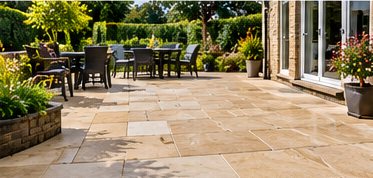
Porcelain or Natural Stone Patio: Which Should You Choose?
How porcelain, Indian sandstone and other natural stone compare for looks, grip, staining, laying and ageing.
Read the guide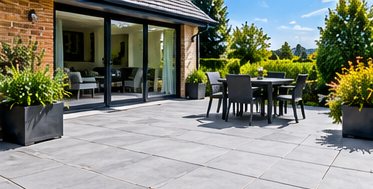
Patio Drainage, Levels and Foundations Explained Simply
Why falls, sub-base and drainage decide whether a patio lasts, plus notes on raised patios, retaining walls and steps.
Read the guide
How a Patio Is Laid: New Patio Construction Step by Step
A step-by-step walk through new patio construction, from set-out to jointing, plus paths and extensions.
Read the guidePlanning patios & pathways?
Send a few details and we will arrange a free site visit. Photos on WhatsApp help us understand the job before we visit.
Get a free quote
Tell us a little about the job and we will come back to you shortly.