
Garden Drainage Solutions: Soakaways, Drains and Channels
Surface water causes, channels, French drains, soakaways and permeable paving, and where water should go.
Surface water problems rarely arrive alone. A patio that floods, a lawn that stays boggy, a driveway that puddles near the garage and damp near the house wall often share the same cause: water has nowhere sensible to go. Fixing the symptom without finding the reason usually just moves the water to a different spot.
This guide covers the common causes, the main solutions (falls, channel drains, French drains, soakaways and permeable paving), why some drainage relies heavily on the ground, and what cannot be solved without bigger works. It also covers one question that matters before any digging: where is the water allowed to go?
Why gardens hold water
Water collects for a handful of reasons. Hard surfaces such as patios and driveways shed rain quickly towards low points. Compacted ground, often from building work or heavy use, stops water soaking in. Clay-heavy or high water-table ground drains slowly. Land can also be low-lying, such as plots near a river, or sloping, where water arrives from higher ground.
Seasonal patterns help too. If the problem appears only after prolonged rain, it points to slow-draining ground or a high water table. If it appears whenever it rains hard, even briefly, the cause is more likely run-off from a roof, patio or neighbouring land arriving faster than the garden can absorb it. Downpipes discharging onto the lawn are a surprisingly common culprit.
Falls, the gentle slope of a surface, are the first thing to check. A paved area that slopes towards the house, or has no fall at all, will hold water however good the drain is.
- Hard surfaces that shed rain towards a low point.
- Compacted ground that does not let water soak in.
- Slow-draining soils or a high water table.
- Low-lying plots, or sloping land that receives water from above.
Channel drains and recessed drainage channels
A channel drain, often called an ACO-style drain after a well-known brand, is a long, narrow channel with a grating on top, set into the surface. It catches water running across a driveway entrance, patio edge or doorway threshold. Recessed drainage channels sit flush with the paving for a neat, low-profile finish.
Fitting an ACO drain installation properly means setting it at the right level on a firm bed, with the surface falling towards it, and connecting it to an outlet. A channel without an outlet is only a long, thin puddle.
- Set the channel slightly below the surrounding paving so water runs in.
- Make sure the grating suits the loads it will carry, such as car wheels.
- Provide a clear outfall: a soakaway, a suitable drain or another approved route.
- Keep the channel clean of leaves and silt.
French drains and soakaways
A French drain is a trench filled with clean stone, usually with a perforated pipe in it, wrapped in a membrane. It collects groundwater or surface water along its length and carries it away to an outlet. It is useful at the foot of a bank, along the edge of a lawn or behind a retaining wall.
A soakaway is a pit or set of storage crates in the ground that holds water and lets it seep slowly into the surrounding soil. How well it works depends entirely on the ground. In free-draining soil it can be an excellent answer, but in dense clay or where the water table is high it may fill and stay full. This is why testing the ground and getting the size and position right matters, and why it is not an automatic fix everywhere.
Permeable paving and waterlogged lawns
Permeable paving lets water pass through the surface into an open stone layer below, so it is sometimes the simplest way to reduce run-off from a new patio or driveway. It still depends on the ground beneath being able to take the water, or on an outlet from the stone layer.
Waterlogged lawn solutions start with working out why the lawn is wet. Compaction can be relieved by aeration. Poor falls can be corrected by regrading. A persistently boggy area may need a French drain, or a drainage layer built into the lawn. If water arrives from elsewhere, intercepting it before it gets to the lawn is more effective than treating the lawn alone.
- Aerate compacted turf so water can move down.
- Regrade low spots and improve the falls.
- Install a French drain to intercept water from a bank or boundary.
- Consider topsoil or sand-based improvement where drainage is the main fault.
Where the water should go
Before any pipe is laid, decide the destination. Water should not be sent onto a neighbour's land, onto the pavement or highway, or towards the walls of your own house. Connecting surface water to a foul sewer is generally not allowed, and the right connection varies, so check with your local council or the water company before connecting to anything.
Good destinations are a soakaway within your own garden where the ground is suitable, a border or lawn that can absorb the flow, or an approved drain. If none of those is possible on your plot, the design needs rethinking rather than forcing. It also helps to think about the whole route: a neat channel at the patio is no use if the pipe it feeds into is blocked, collapsed or leads nowhere, so follow the water to its end before you trust the system.
Groundworks, preparation and what cannot be fixed with small works
Good drainage depends on garden groundworks done properly: excavation and site preparation to the right depth, sub-base preparation that is compacted in layers, and accurate falls. Shortcuts here are the reason many installations underperform. Pipes need a consistent fall, stone needs wrapping so soil cannot clog it, and any inspection points should be left accessible so the system can be rodded or flushed if it silts up.
Some problems are bigger than a garden can solve alone. A very high water table, flooding from a river or ditch, or run-off from a large area uphill may need work beyond your boundary, drainage engineering or cooperation with neighbours and authorities. We would rather tell you that at a site visit than install something that cannot work. Our free site visit covers a look at levels, falls and likely outlets.
Common questions
Will a soakaway work in any garden?
No. It depends on how well the ground drains and how high the water table is. In dense clay or wet ground a soakaway may fill and stay full, so it should be sized and positioned after checking the soil.
What is the difference between a channel drain and a French drain?
A channel drain sits on the surface and catches water running across paving. A French drain is a buried, stone-filled trench with a pipe, which collects water from the ground or surface along its length.
Can I send garden drainage into the road or a neighbour's garden?
You should not. Surface water must not be discharged onto the highway or neighbouring land, so check with your local council or water company about acceptable outlets.
Keep reading
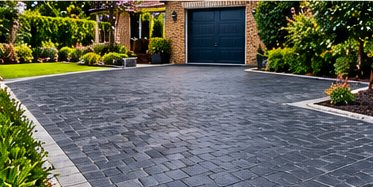
Do You Need Planning Permission for a New Driveway?
The front garden paving rule, permeable surfaces, dropped kerbs and what to ask your council.
Read the guide
Patio Drainage, Levels and Foundations Explained Simply
Why falls, sub-base and drainage decide whether a patio lasts, plus notes on raised patios, retaining walls and steps.
Read the guide
Retaining Walls, Raised Beds and Sleepers Explained
Retaining walls, sleepers, raised beds, steps and edging: materials, limits, drainage and when to call an engineer.
Read the guidePlanning hardscaping?
Send a few details and we will arrange a free site visit. Photos on WhatsApp help us understand the job before we visit.
Get a free quote
Tell us a little about the job and we will come back to you shortly.