
Garden Steps: Design, Materials and Building on a Slope
How to plan safe, comfortable garden steps on a slope, from rise and going to materials, handrails, drainage and foundations.
Garden steps look straightforward until you have to walk up them in the dark, in the rain, with a bag of shopping. The difference between steps that feel natural and steps that feel awkward is almost entirely in the proportions and the detail underneath, not in the surface material.
This guide explains the two measurements that matter in plain terms, the common materials and how they behave, and the things people forget: handrails, lighting ducts, drainage, grip and the foundations that stop steps settling.
Rise and going in plain terms
Each step has a rise, which is how high you lift your foot, and a going, which is how deep the tread is. Comfortable steps keep both the same all the way up. Your legs learn the rhythm after the first two steps, so a single step that is a bit higher or shallower than the rest is the one people trip on.
In a garden, gentler is better than steep. Garden steps are usually lower and deeper than indoor stairs, so there is room to place a whole foot and walk without concentrating. A good test is to mark the steps out on the slope with pegs and string and walk them carefully with a loaded wheelbarrow or a laundry basket, before anything is dug.
Think too about the slope between the steps. If the ground above and below the flight is steeper than the steps themselves, they can feel like a ladder. A landing every so often, even a small one, breaks up the climb and gives you a place to stop with a heavy load.
- Keep every rise the same, and every going the same.
- Make treads deep enough for a full foot, with a slight fall to shed water.
- Add a landing where the flight turns or runs long.
- Mark out on the ground and walk it before committing.
Choosing materials
The material changes the look, the grip and the maintenance. Concrete or block paving steps are practical and tie in with a driveway or patio. Natural stone has character and weathers well but can be slippery when it is smooth or covered in algae. Porcelain is hard-wearing and easy to clean when it has the right slip resistance, though it needs a solid, accurately built structure beneath it.
Timber sleepers are popular for informal garden steps and for slopes in planted areas. They are quick to build and blend into borders, but they need to be of a suitable grade, firmly fixed and drained, and over time timber can become slick and will need replacing before it fails. Brick and block risers with a paved tread are a middle route and easy to match.
Think also about maintenance. Timber needs checking for rot and loose fixings, stone may need algae treatment, and porcelain is easiest to wash. The material that suits your house and garden is the one you will actually keep clean.
Foundations and how steps are built
Steps that settle crack and tilt. The usual cause is building on loose or backfilled soil. Good steps sit on a compacted sub-base, often with a concrete or mortar bed under each riser, and the risers are bonded or fixed so they cannot slide out. Where steps are cut into a slope, the bank each side may need holding back so soil does not slump onto the treads.
On a long flight or a steep slope, the structure may need to be more than a stack of slabs. Taller changes in level may need a proper retaining arrangement, and for anything substantial or load-bearing it is sensible to get an engineer's input. We handle groundwork, laying and finishing ourselves, and we will say honestly if a slope needs more than steps.
Steps that cross a lawn or border need edges that stop soil washing onto the treads. A strip of gravel, a kerb or a retaining face on each side keeps the structure clean and protects it from being undermined by water running along the side.
Drainage and keeping steps dry
Water that sits on steps becomes ice or algae. Each tread should fall slightly forward so rain runs off, and the flight needs somewhere for that water to go, such as a gravel strip, a planted border or a drain at the foot. Do not let a path or a lawn above the steps pour water over them.
Behind the steps, the soil also needs to drain. A bank holding water pushes harder on the structure, which is how steps and small walls end up leaning. A free-draining backfill and, where needed, a land drain protect the work.
Treads also benefit from a very slight forward slope, just enough for water to run off without being noticeable underfoot. Flat treads hold puddles, and puddles turn to ice or algae.
Handrails, grip and safety
A handrail is worth having wherever there are more than a few steps, where the steps are shaded or wet, or when anyone in the household finds stairs difficult. It should be sturdy, easy to grip and fixed into solid footings, not just into a slab. A rail on one side is a great help; on both sides is better for a wide flight.
Grip comes from the surface and from keeping it clean. Textured or tumbled surfaces, anti-slip strips and the right porcelain finish all help, but none replaces regular brushing and algae treatment. Highlight the front edge of each tread, with a contrasting colour or a light, so the steps are easy to read at dusk.
- Fix handrails into solid footings.
- Choose textured surfaces rather than polished ones.
- Keep treads clear of moss, leaves and algae.
- Make the leading edge of each step easy to see.
Lighting, ducts and planning ahead
Lighting steps makes them safer and gives the garden an evening feel. The time to plan it is before the steps are built. A short length of duct set into the structure lets cables run to riser lights, wall lights or post lights later without breaking anything out. A qualified electrician should connect outdoor electrics.
Finally, think about how the steps will be used: carrying shopping, taking out bins, getting a mower up to the top lawn. If a ramp or a longer, gentler path would suit better, say so early. A free site visit is a good moment to walk the slope and talk it through.
Common questions
How steep should garden steps be?
Steep enough to be practical but shallow enough to climb without effort, with every step the same height and depth. A gentle, deep tread is better than a steep, narrow one. Mark them out and walk them before building.
Which material is safest for garden steps?
Textured natural stone, tumbled block or a porcelain with the right slip rating all grip well. Smooth, polished surfaces and untreated timber become slippery when wet. Whatever you choose, regular cleaning matters as much as the product.
Do garden steps need a handrail?
There is no need for a rail on a single low step, but a handrail is sensible on longer flights, shaded steps and for anyone with limited mobility. Fix it into solid footings rather than loose slabs.
Keep reading
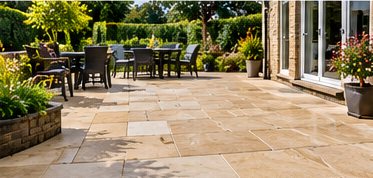
Raised and Multi-Level Patios and Steps: What to Know
Why and when to raise a patio, how retaining walls and steps are built, and the safety and drainage points to plan for.
Read the guide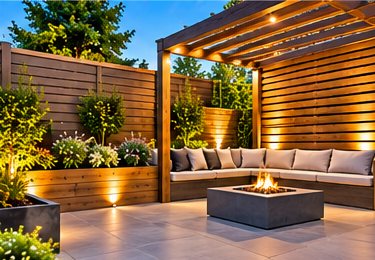
Retaining Walls, Raised Beds and Sleepers Explained
Retaining walls, sleepers, raised beds, steps and edging: materials, limits, drainage and when to call an engineer.
Read the guide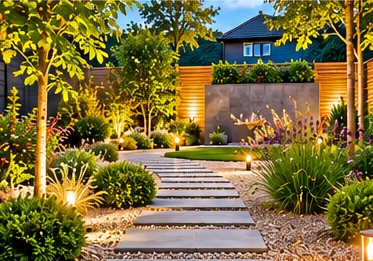
Sloping Gardens: Terraces, Levels and Retaining Walls
How to read a sloping garden and decide between cut and fill, terraces, retaining walls, steps and drainage, in sensible phases.
Read the guidePlanning hardscaping?
Send a few details and we will arrange a free site visit. Photos on WhatsApp help us understand the job before we visit.
Get a free quote
Tell us a little about the job and we will come back to you shortly.